

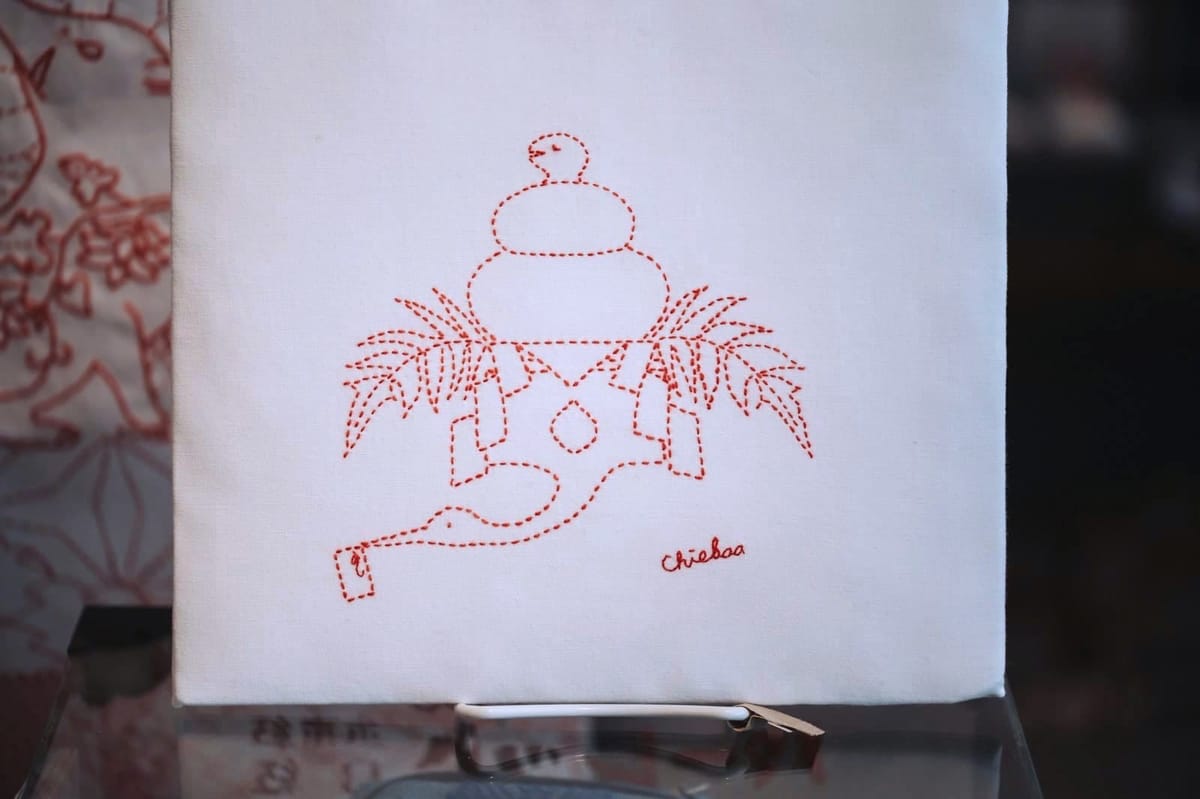
Chiebaa transforms sashiko into a lifelong source of ikigai, creating contemplative designs where intentional white space and seasonal imagery offer visual respite and emotional calm | Sashiko Artisan Profile
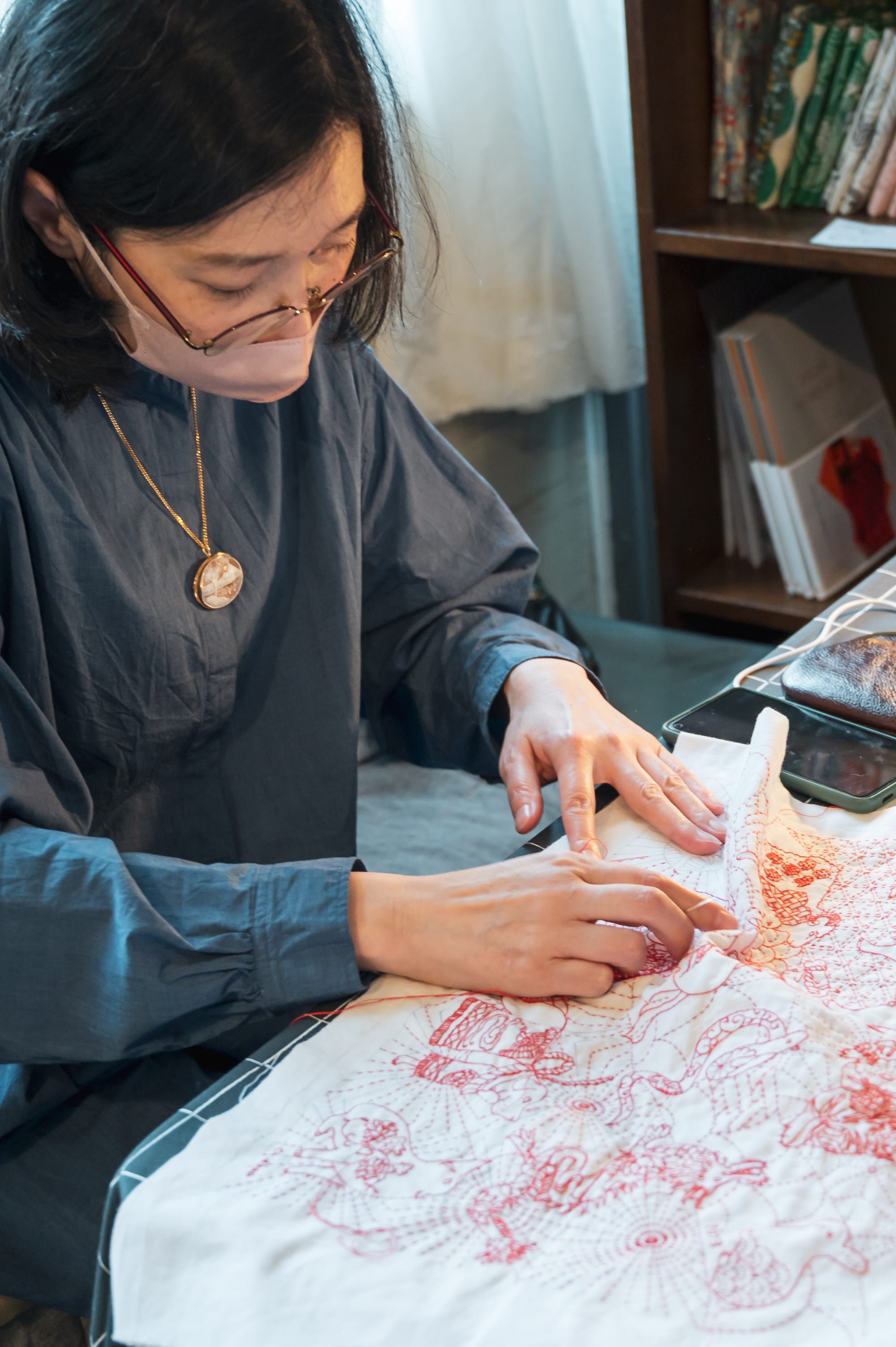
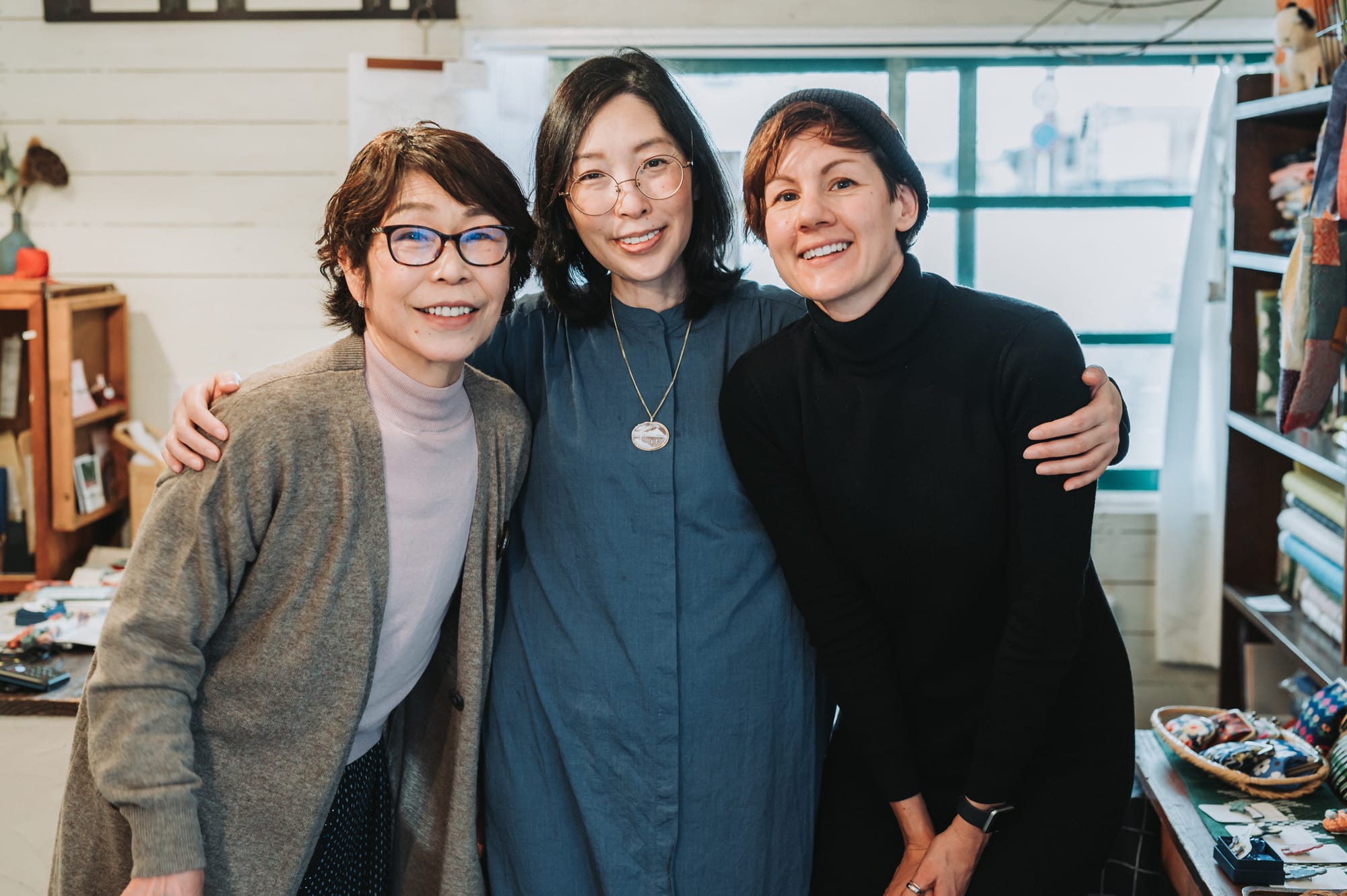
Chiebaa is 田中千絵 Tanaka Chie, a passionate sashiko artisan who creates some of the most carefully stitched sashiko I've ever seen.
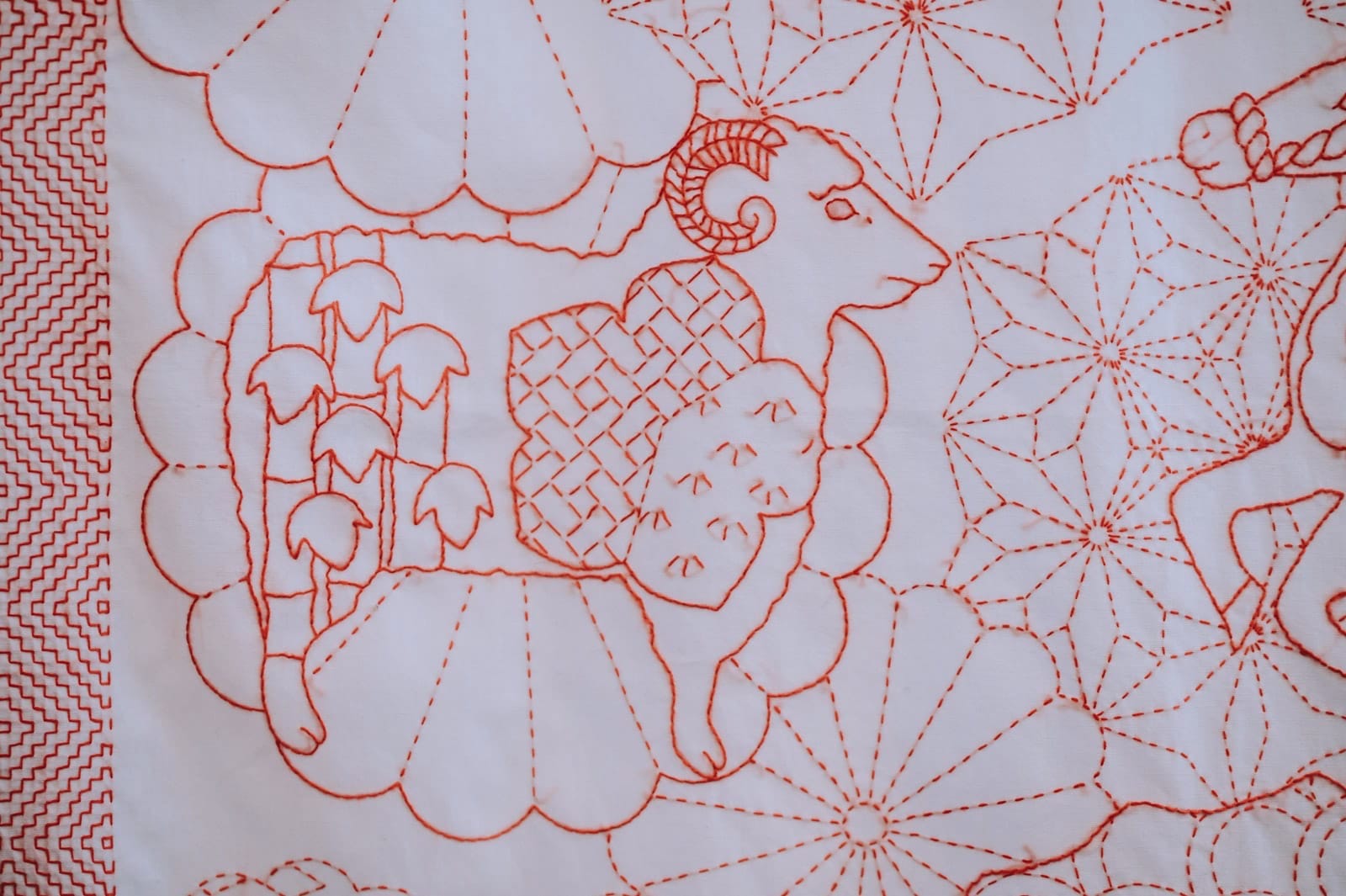
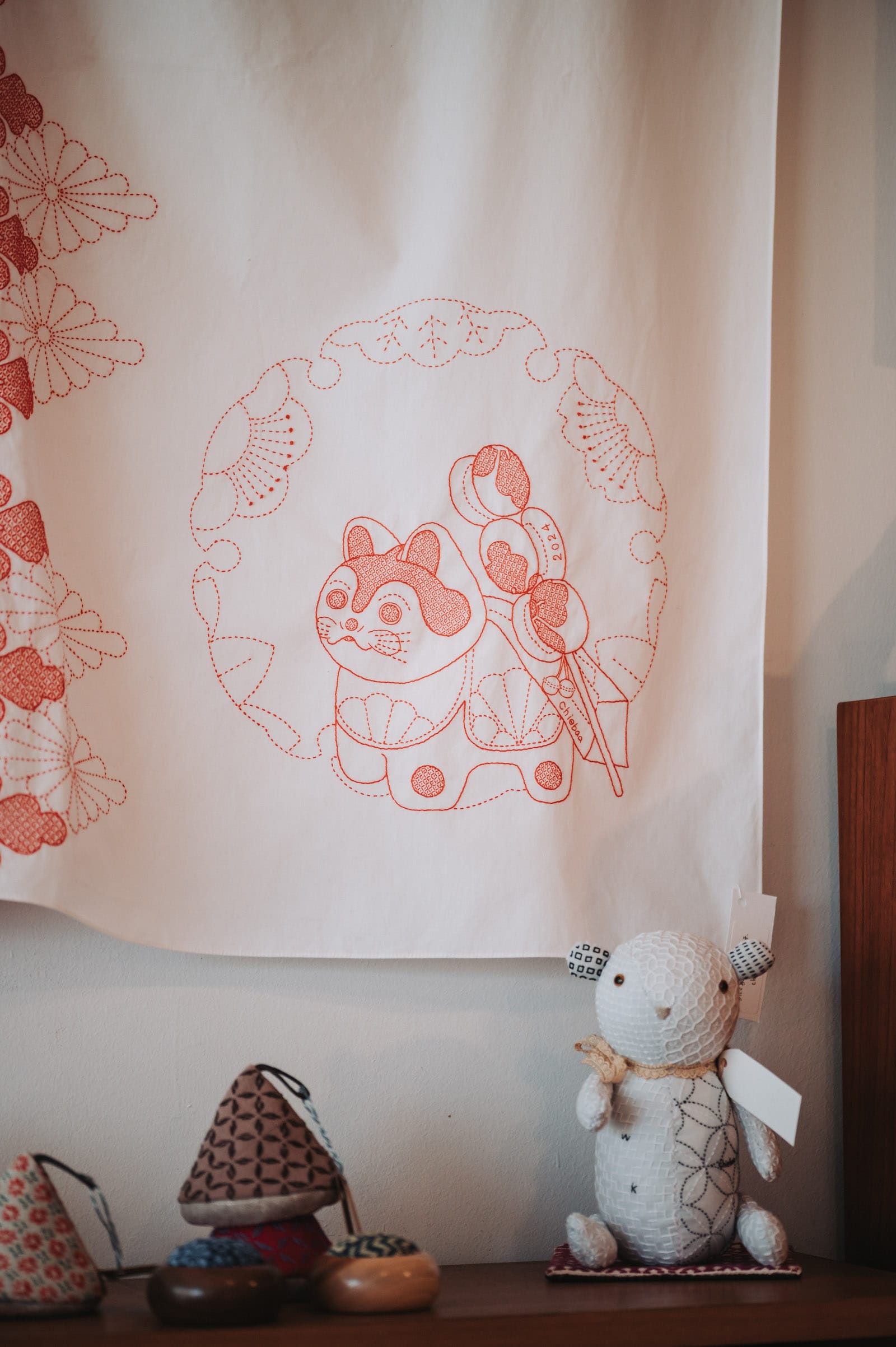
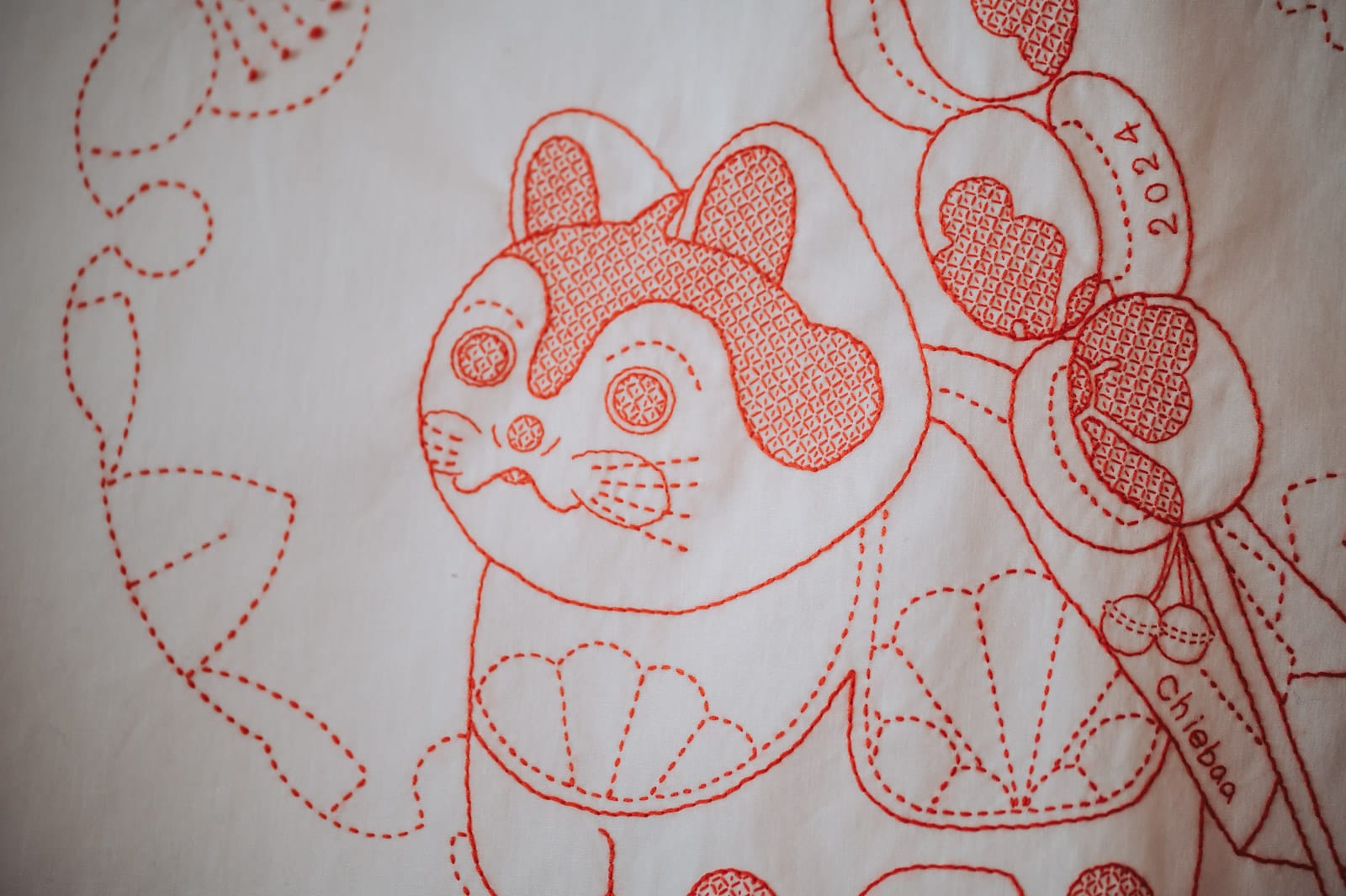
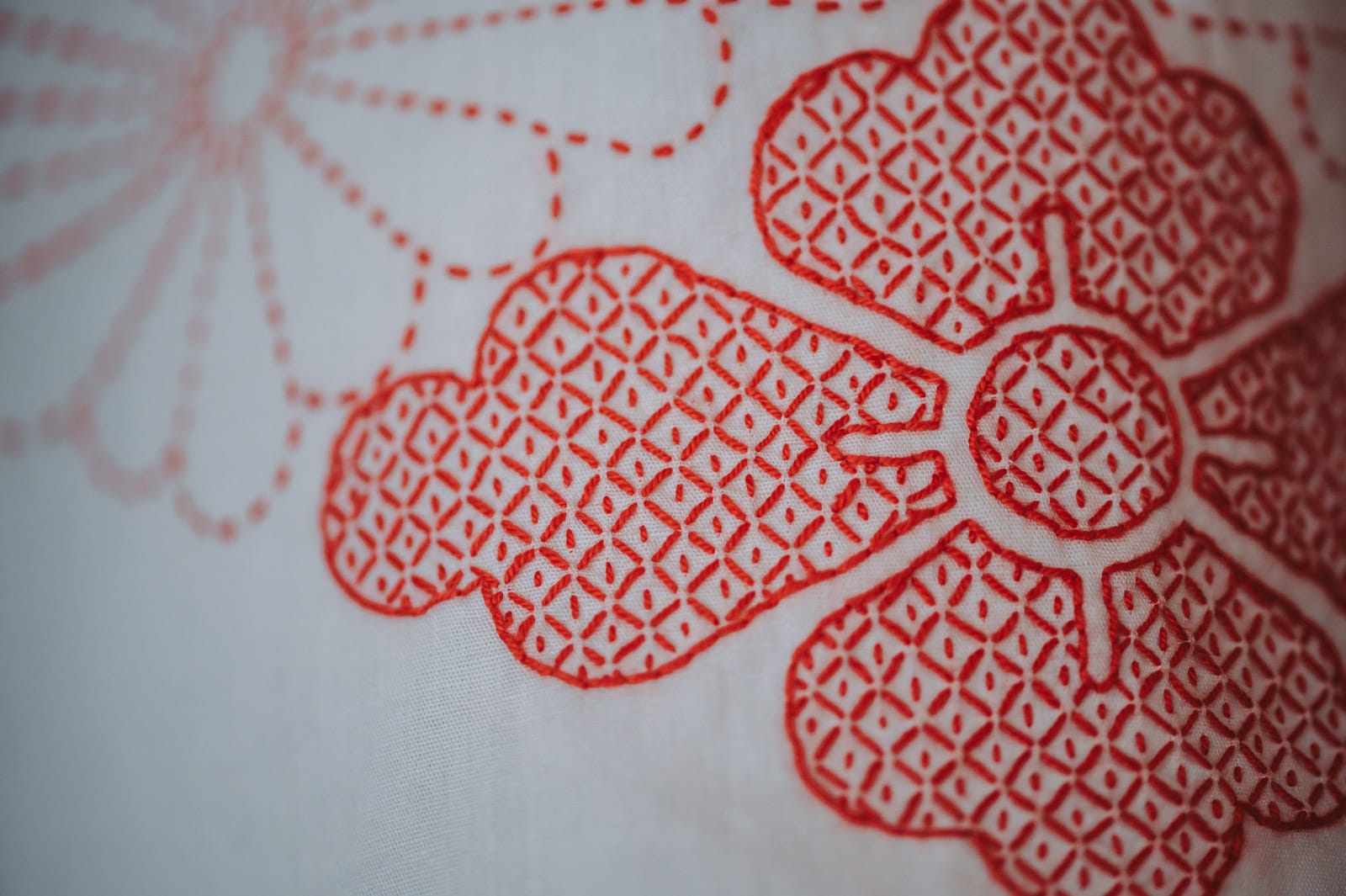
In recent years, she has also designed an abundance of new patterns. Her designs are full of captivating traditional patterns, gentle characters, and Japanese symbolism. Perhaps it's no coincidence that her name is spelled with the letters 千 “thousand” and 絵 “pictures.”
When I first met her, I was utterly enchanted by her calming aura. Chiebaa is soft-spoken and caring, carefully observing her surroundings to make sure no one feels left out.
I could have guessed then that she must have faced hardship to become such a considerate and attentive person. When she told me her story, it all became quite clear.
A journey of healing and joy through sashiko
Chiebaa started her needlework journey during a time of depression. She didn't just find joy in crafting, but a means of personal expression and a source of inner peace.
Chiebaa’s story is a testament to the power of creativity and the profound impact that finding your passion can have.
Uncover how needle and thread can weave a tapestry of strength and beauty, changing someone's life.
From darkness to delight: how Chiebaa found cross-stitch
Before sashiko became Chiebaa's passion, her crafting journey began with cross-stitch.
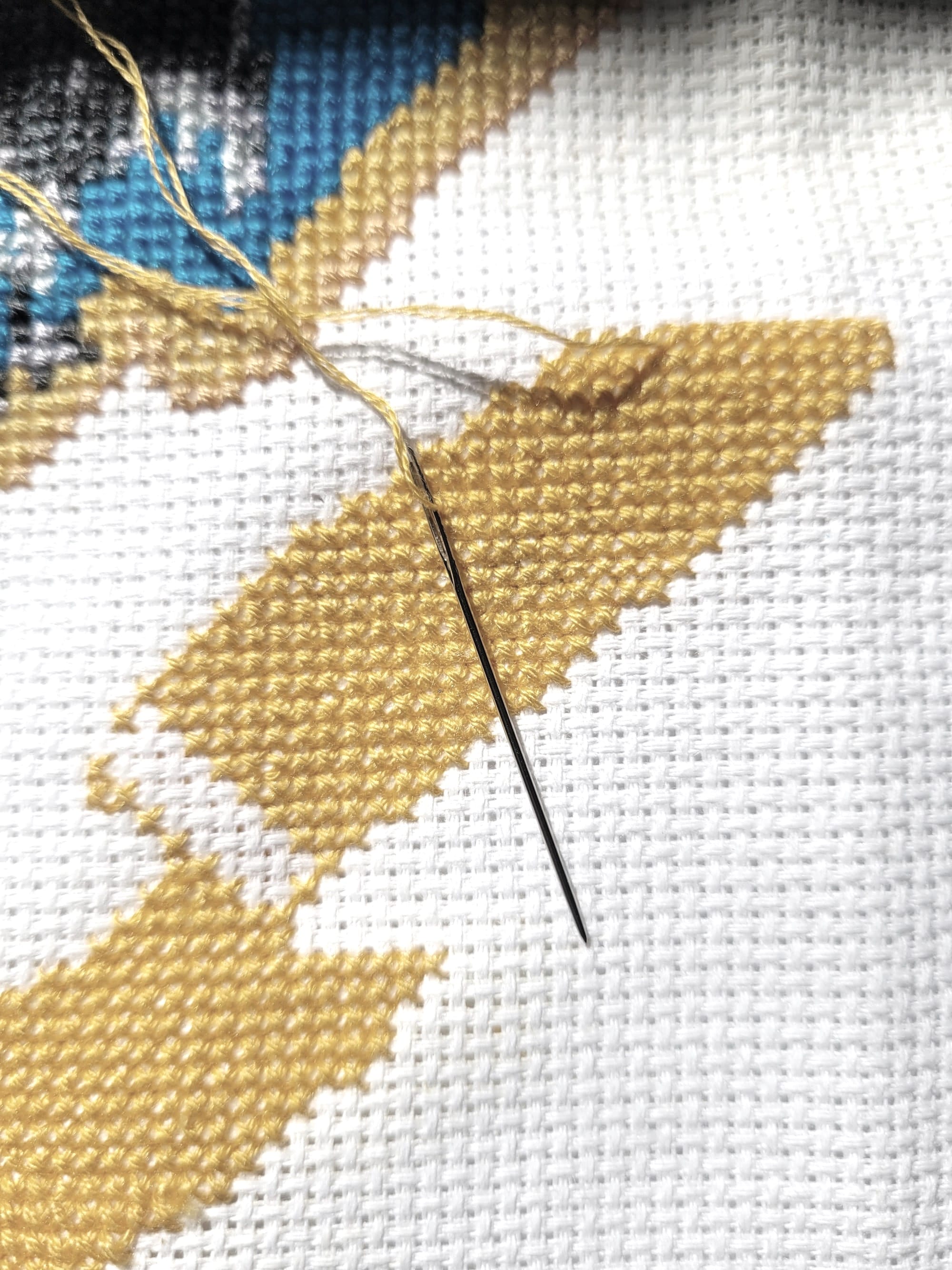
She started this craft in her mid-twenties, during a very difficult time in her life, when she was experiencing depression. The depression left her unable to do anything for herself. So Chiebaa returned to her parents' home with her two young children.
Chiebaa was more or less bedridden when her mother introduced her to a friend who taught cross-stitch. Her mother encouraged Chiebaa to attend her friend's lessons, offering to look after her children while she was away.
Chiebaa began attending these lessons about twice a month, and to her surprise, she found the activity incredibly enjoyable. She loved doing cross-stitch so much that she spent less and less time in bed. Instead, she found herself staying up late to work on her projects.
Chiebaa is confident that cross-stitch provided the necessary spark for her recovery from depression.
For the following thirty years, cross-stitch remained an important part of her life, serving as her kokoro no sasae 心の支え, her “emotional support” (lit. “heart's support”).
Working on her projects became a vital source of personal enjoyment.
Sometimes Chiebaa would spend anything from six months to a year completing bigger projects. Never for the purpose of publicly displaying her works, but solely for the joy that she derived from working on them.
This deeply personal connection to crafting, born out of a period of intense difficulty, laid the foundation for her later relationship with sashiko.
From cross-stitch to sashiko: a journey of transformation
However, entering her fifties, Chiebaa encountered an obstacle in her enjoyment of her treasured hobby. Cross-stitch demands precision in counting individual fabric threads, but she discovered that her eyes could no longer manage this detailed work. The resulting frequent errors left her discouraged, and she began to worry that she might have to abandon her cherished craft entirely.
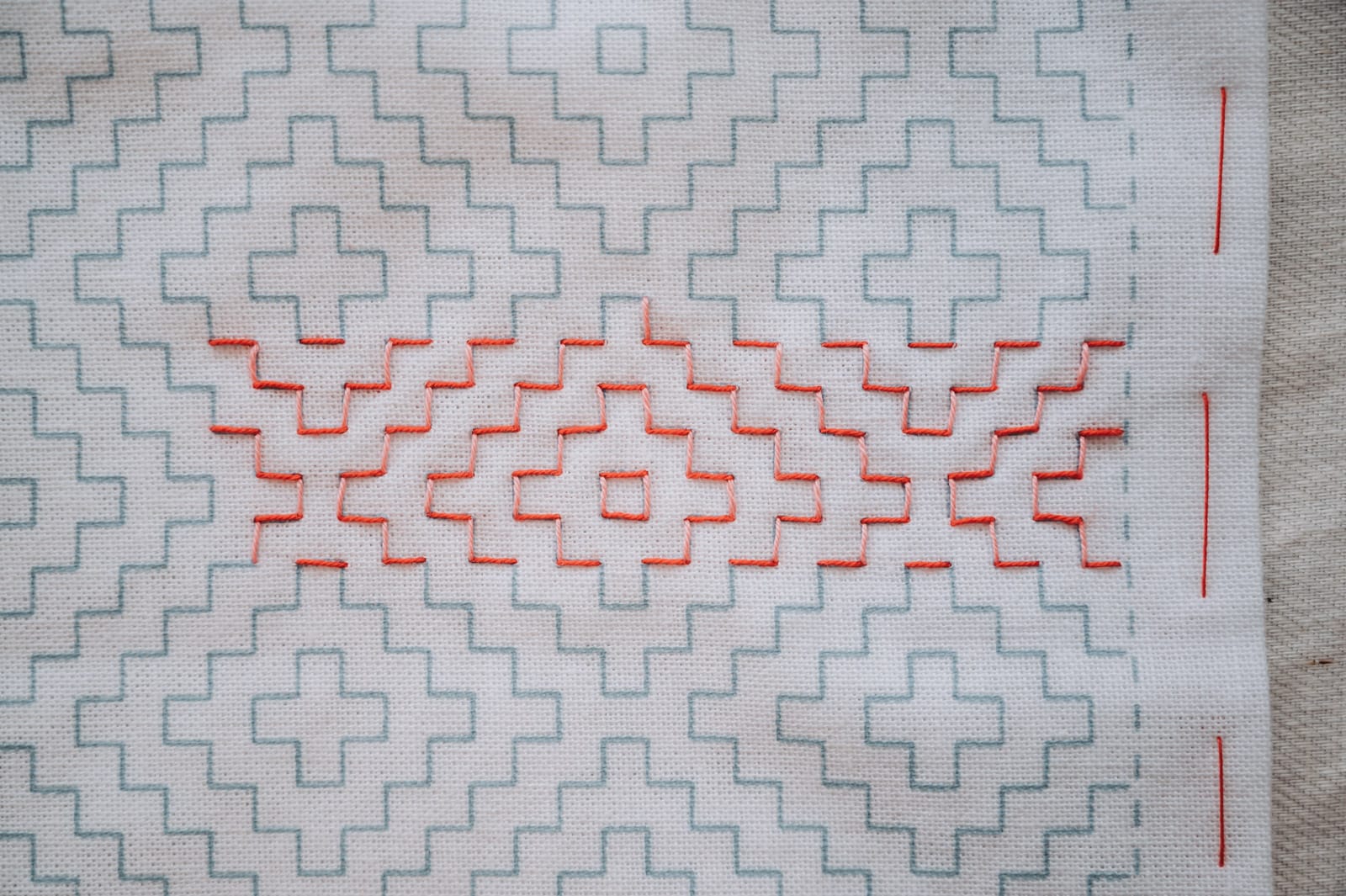
It was during this period of uncertainty about her crafting future that Chiebaa bumped into sashiko in a craft store. When she saw a pre-printed sashiko pattern, she knew immediately that she could do sashiko no matter her age.
That very day marked her transition from cross-stitch to sashiko, opening a new chapter in her lifelong dedication to needlework.
Developing a unique personal style
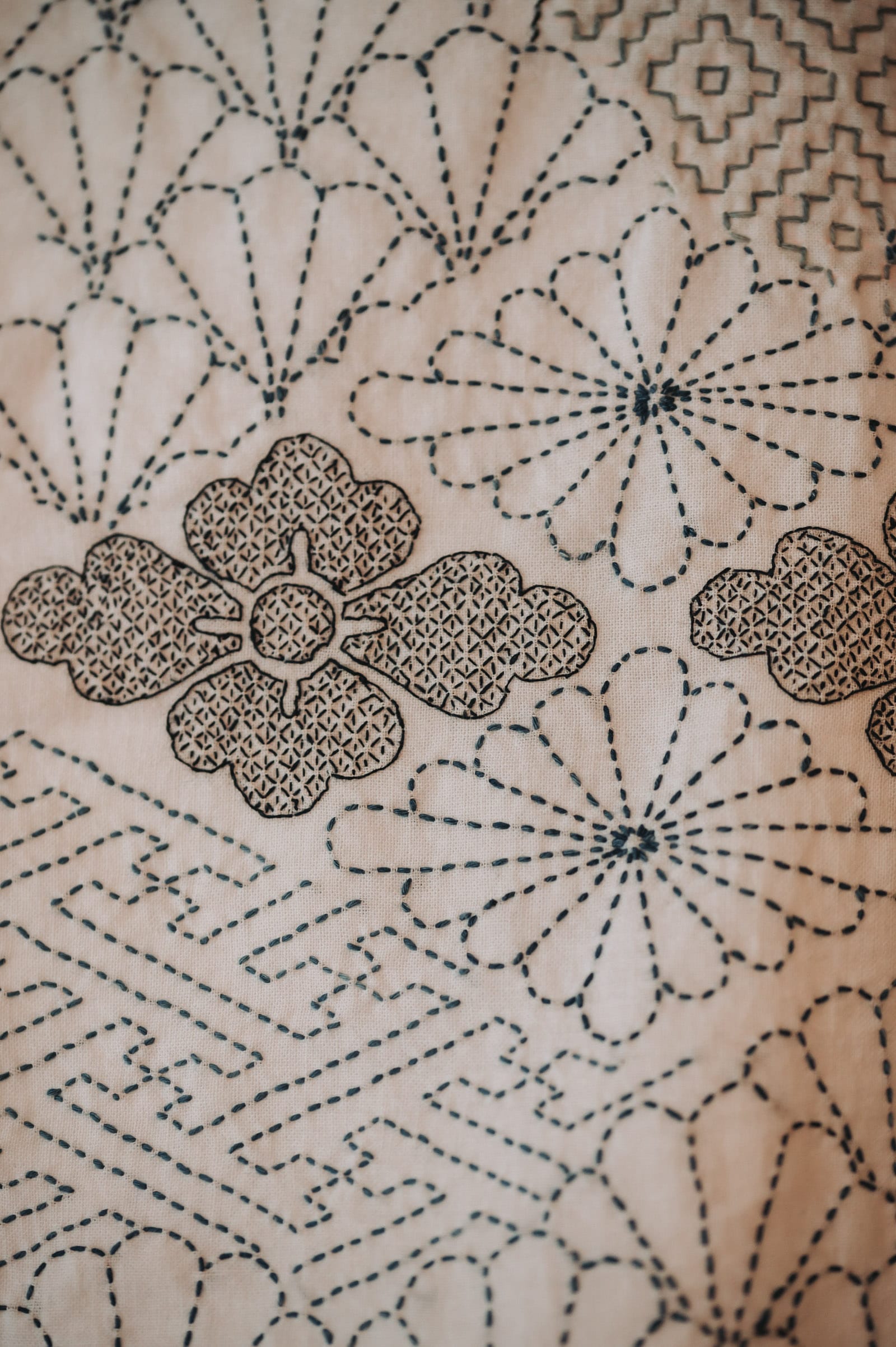
As Chiebaa settled into her new craft, she quickly discovered that sashiko would become far more than just a replacement for cross-stitch. It would evolve into a deeply personal form of artistic expression that reflected her own journey toward inner peace.
Initially, like many beginners, Chiebaa relied on pre-made kits to guide her through the fundamental techniques. However, she soon found herself facing a familiar challenge. The kits were not only expensive, but her enthusiasm and skill meant she completed them far too quickly. More importantly, working within the constraints of someone else's vision left her yearning for something more personal.
The solution came from an unexpected source: the sashiko community on Twitter. Through online connections with fellow artisans, Chiebaa began learning how to create her own patterns and designs. These generous craftspeople shared techniques, offered guidance, and opened her eyes to the endless possibilities that lay beyond commercial kits.
This transition marked a pivotal moment in her creative journey. Suddenly, Chiebaa found herself choosing her own colors and patterns, a process she describes as “very rewarding.” The freedom to select fabrics that spoke to her, to experiment with color combinations that reflected her mood or the changing seasons, transformed her relationship with the craft once again.
Finding inspiration in nature
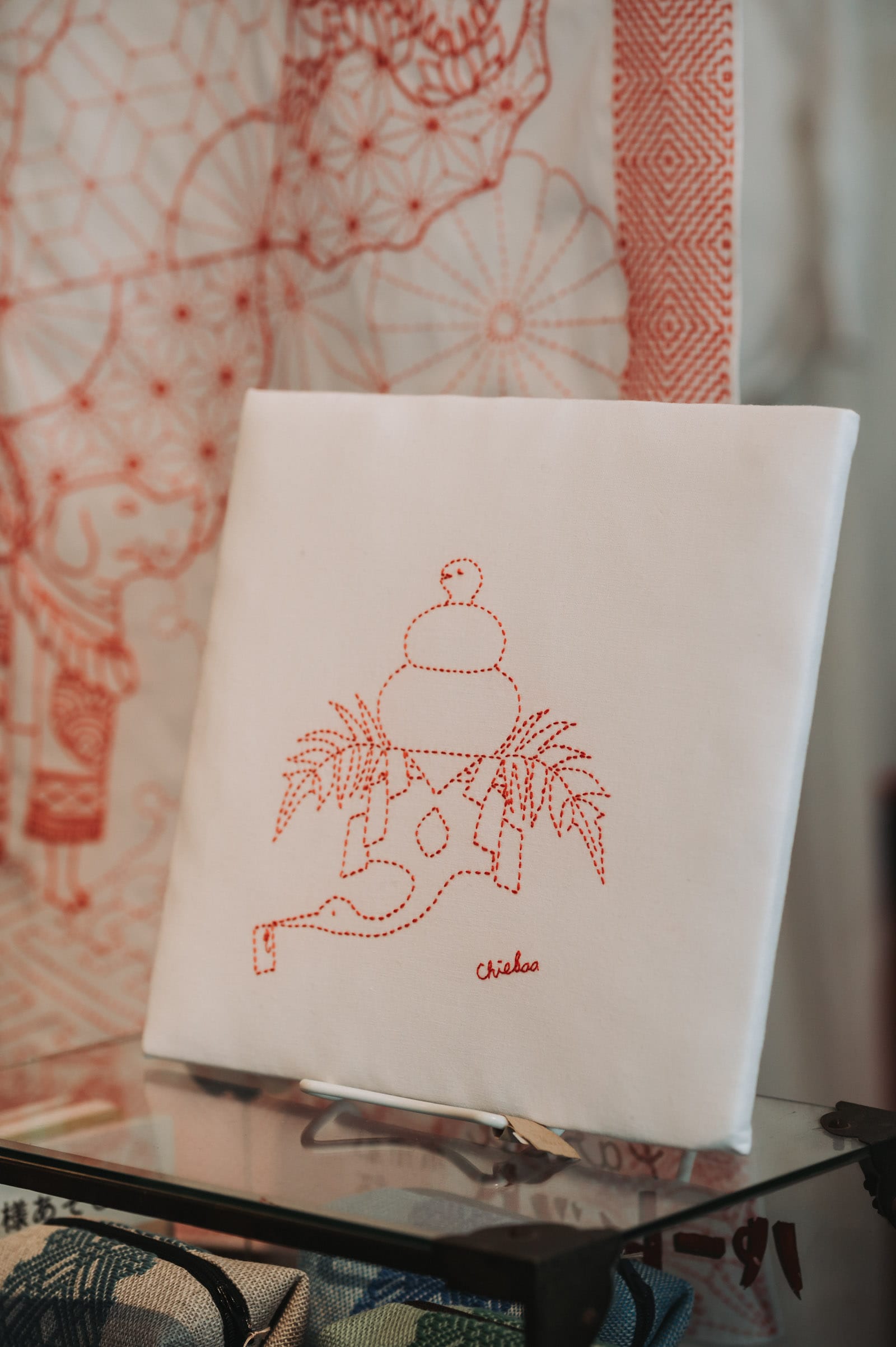
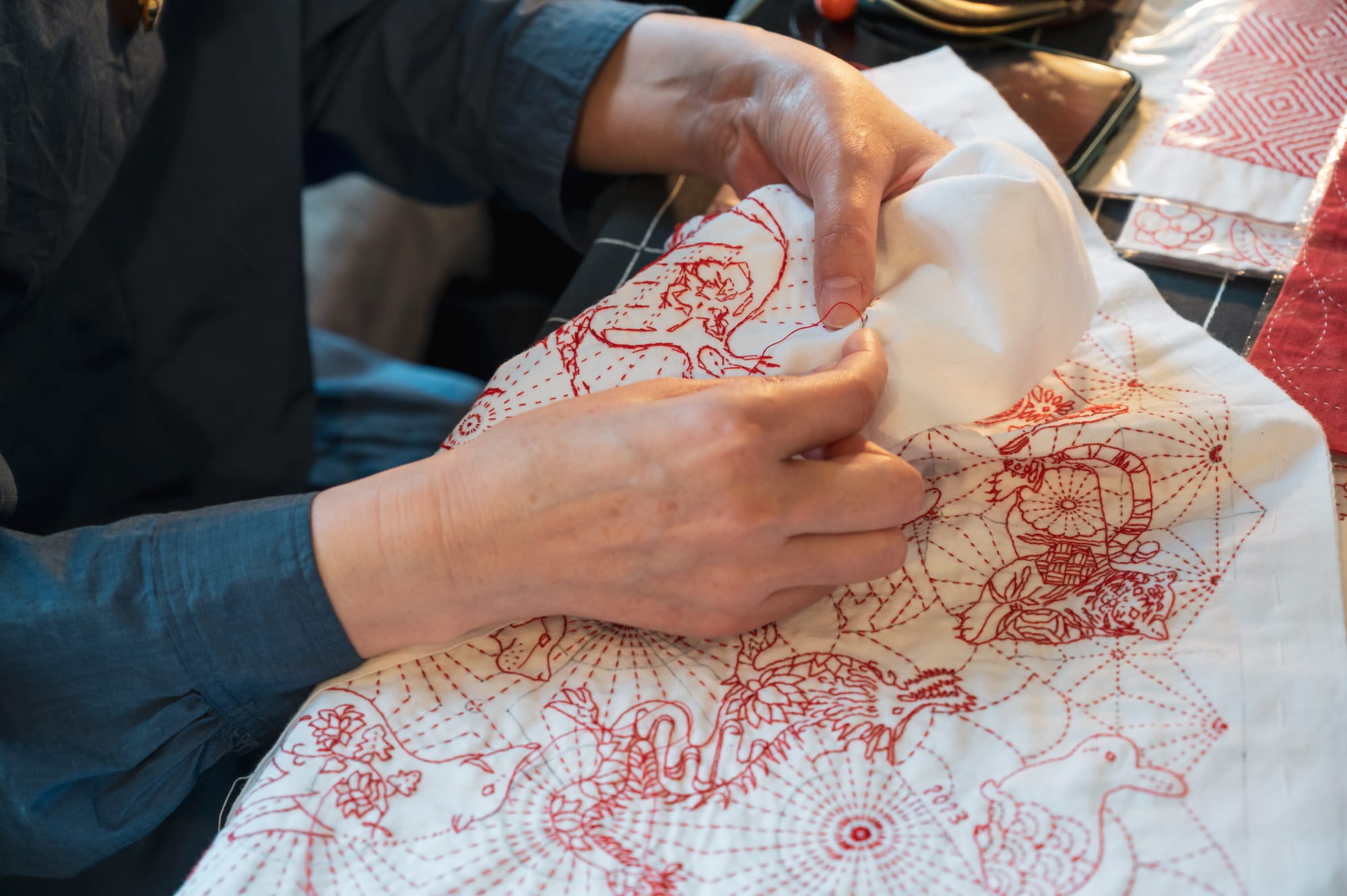
Chiebaa's personal style gradually emerged, characterized by her love and appreciation for the natural world. Her work features seasonal motifs and birds, reflecting her observation of the subtle changes that mark the passage of time.
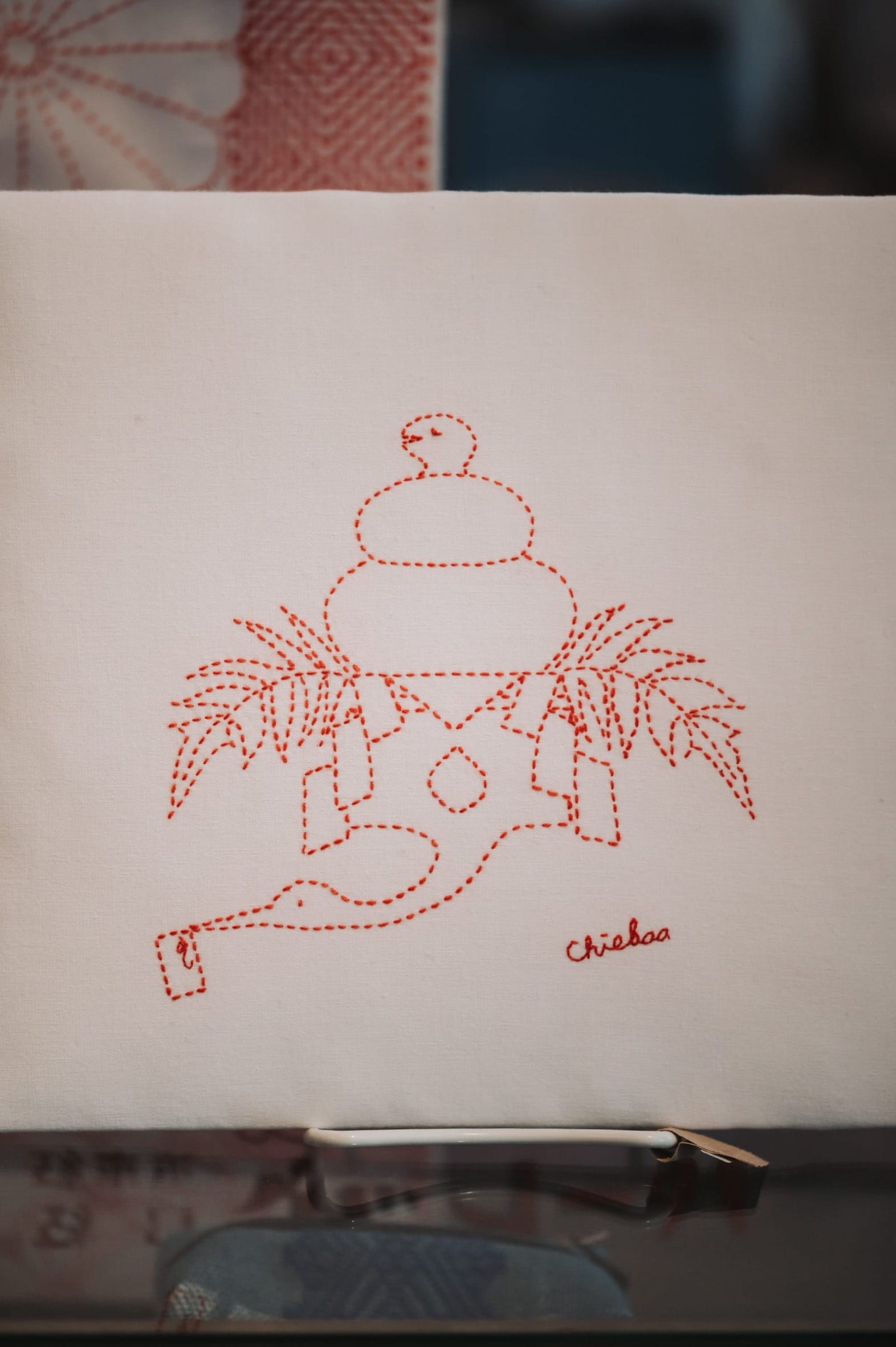
Often, the motifs have their origin in traditional Japanese imagery, depicting seasonal events interwoven with patterns that have a deep meaning in Japanese culture. Through her stitches, Chiebaa connects with centuries of artistic tradition, finding in these time-honored symbols a language that speaks to her personal experience and the collective wisdom of her cultural heritage.
The evolution toward tranquility
Perhaps the most striking aspect of Chiebaa's artistic development has been the dramatic evolution of her design philosophy. In her early days of creating original patterns, she admits her work was “crazy.” Every inch of fabric was densely filled with stitching and seemed to demand attention, creating pieces that buzzed with energy and complexity.
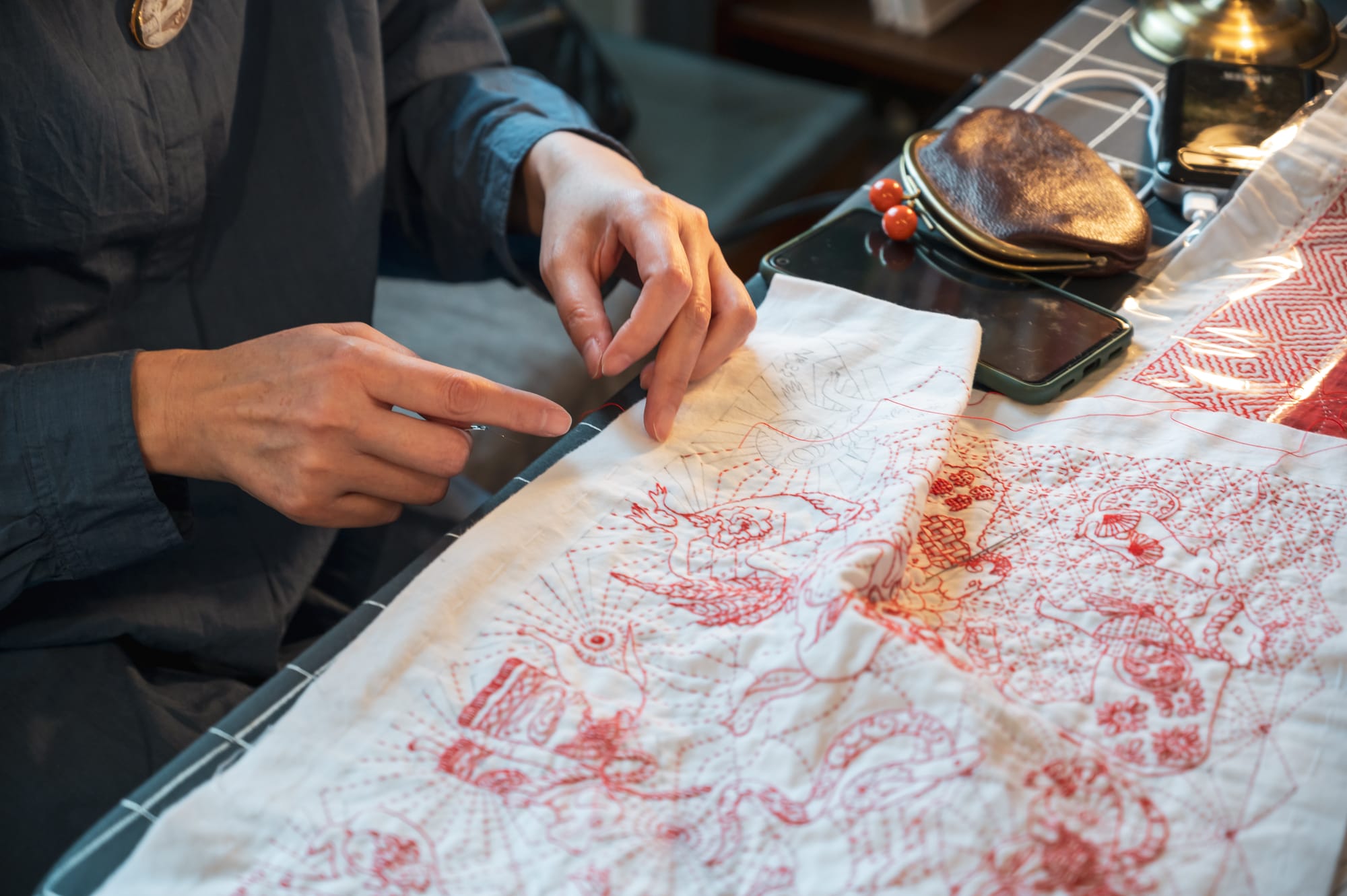
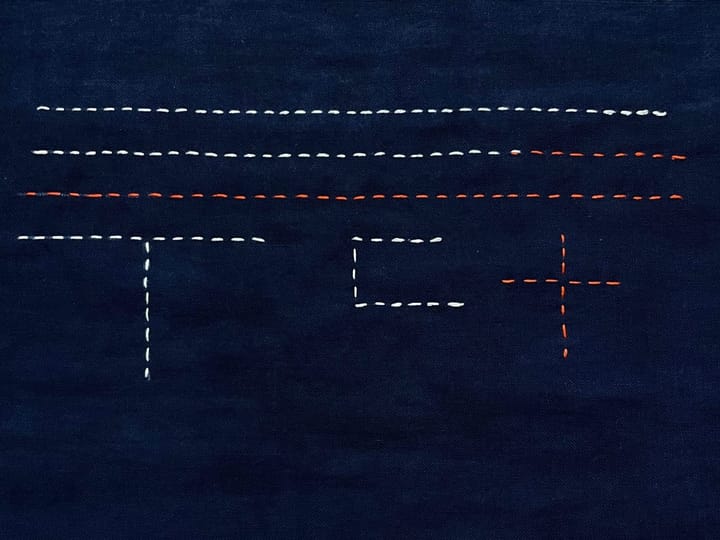
Over time, however, something fundamental shifted. Chiebaa began incorporating more empty space into her designs, allowing the fabric to breathe and the individual stitches to stand out with greater clarity. This wasn't merely an aesthetic choice—it reflected a deeper understanding of what she wanted her art to accomplish.
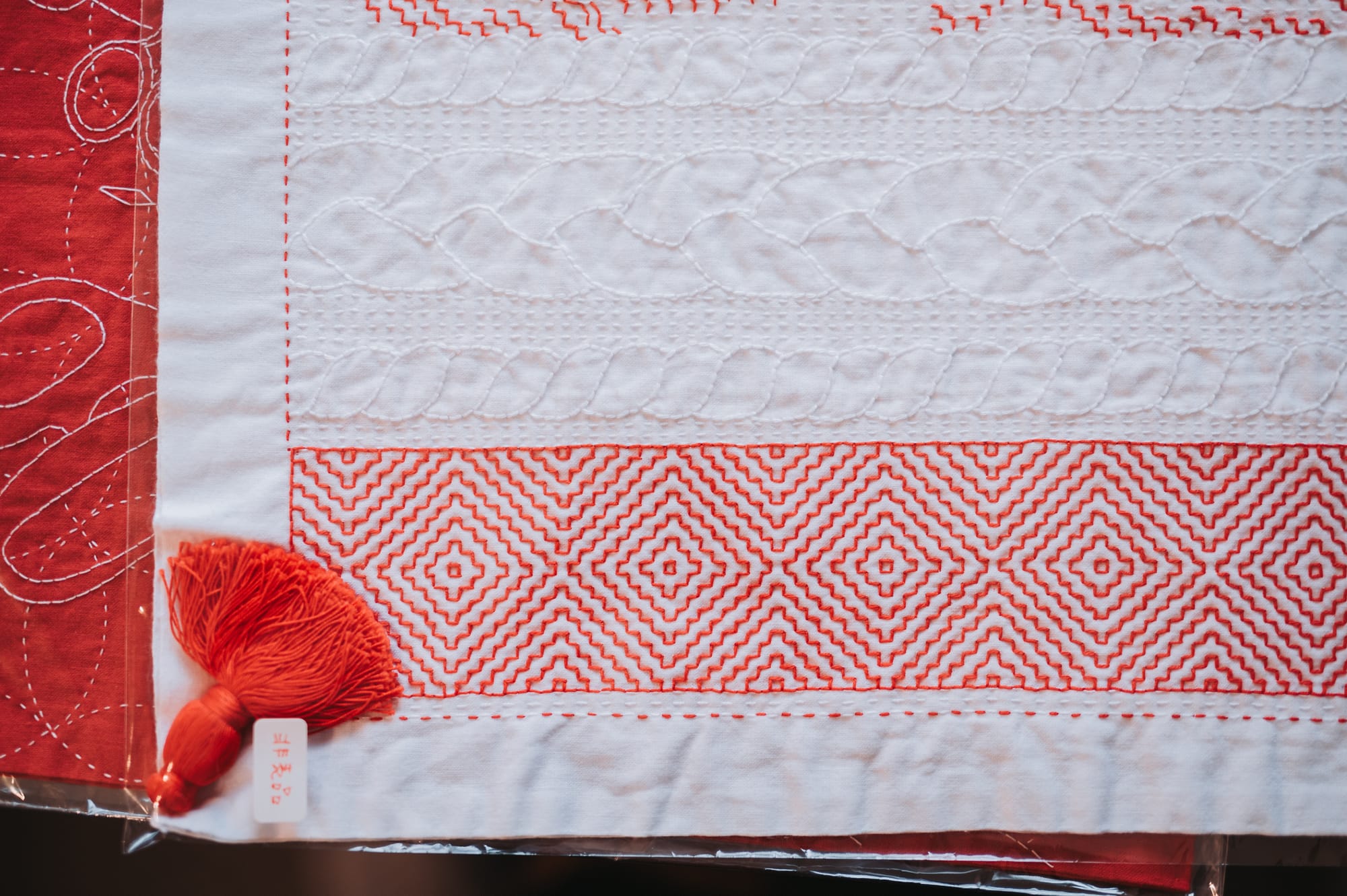
She now creates works intended to be healing rather than overwhelming. Chiebaa deliberately avoids “tight” patterns, instead crafting pieces that offer the viewer a feeling of peace and spaciousness. Her stitches now dance across the fabric with intentional restraint, creating compositions that invite contemplation rather than demand attention.
Looking at Chiebaa's recent work alongside her earlier pieces, it's impossible not to see a reflection of her own inner transformation. Just as she evolved from someone overwhelmed by life's difficulties to the calm, settled person I encountered, her art has journeyed from overwhelming complexity to serene simplicity. Her designs have become visual representations of the peace she has cultivated within herself—spaces for the heart to rest, much like the emotional refuge that needlework first provided during her darkest days.
Practical advice and techniques for beginners
Having witnessed firsthand how sashiko transformed her life, Chiebaa is passionate about sharing her knowledge with newcomers to the craft. Her approach to teaching reflects the same gentle wisdom that characterizes her art—practical, thoughtful, and always focused on the joy of the process rather than perfection of the result.
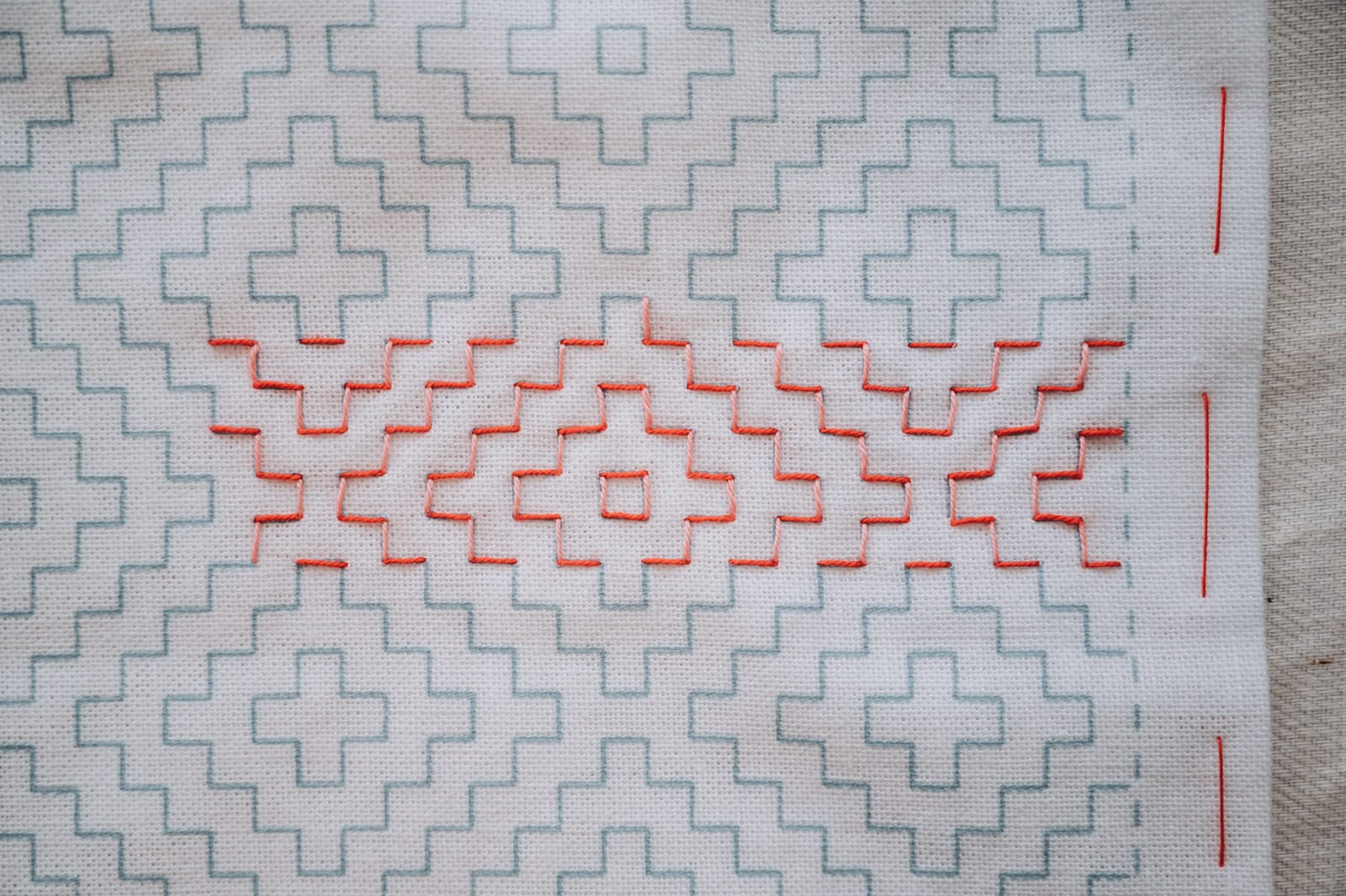
When advising beginners, Chiebaa emphasizes that starting simple is key. She believes newcomers shouldn't overwhelm themselves with too many tools, instead focusing on developing a feel for the rhythm and meditation of the stitching process itself.
Starting small and smart
One of Chiebaa's most important pieces of advice is to resist the urge to buy too many materials at once. Having learned this lesson during her expensive kit-buying phase, she now advocates for a more measured approach: buy what you need for each project as you go. This not only keeps costs manageable but also allows beginners to gradually discover their preferences for fabrics, threads, and colors without the pressure of having made large investments.
This philosophy extends beyond mere practicality—it reflects Chiebaa's belief that sashiko should enhance your life, not burden it with unnecessary complexity or expense.
The heart of the practice
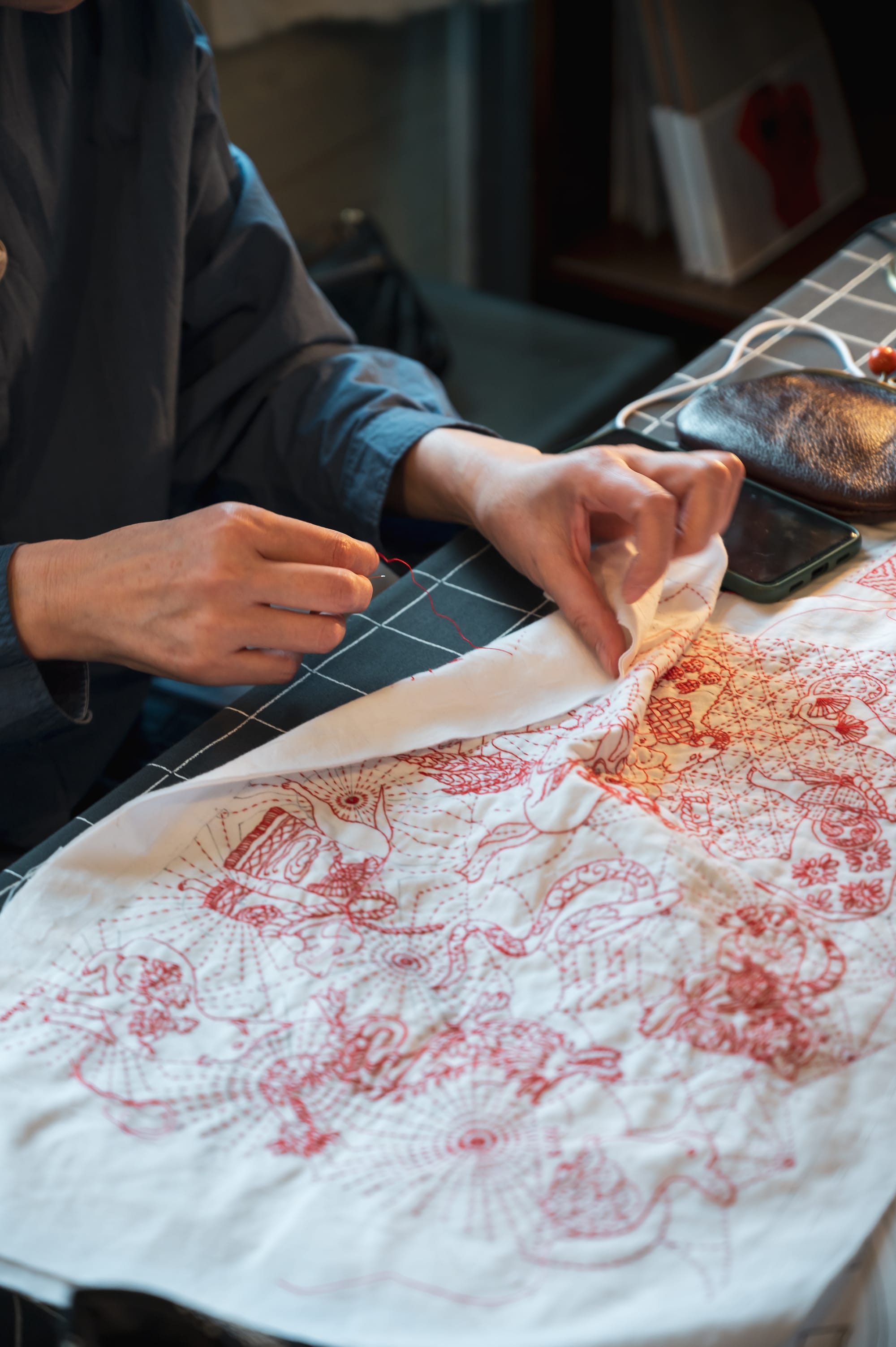
Above all, Chiebaa stresses that sashiko should be about personal enjoyment rather than showing off. In a world increasingly dominated by social media and the pressure to display our accomplishments, her reminder feels both refreshing and necessary. The true value of sashiko lies not in impressing others, but in the quiet satisfaction and inner peace it brings to the maker.
Chiebaa encourages beginners to establish a practice of daily stitching, even if just for a short time. She believes this consistent engagement can enrich one's life and provide a calming way to relax at home. Like meditation or journaling, the regular rhythm of needle through fabric creates a sacred space in ordinary days—a few minutes of focused attention that can transform both mood and perspective.
Simple techniques that make a difference
One practical tip that Chiebaa often shares relates to handling thread beginnings and endings. Rather than creating tight knots that can show through the fabric, she leaves the beginning of the thread loose and weaves it in with the end of the thread on the back of the work. This technique creates a cleaner finish while maintaining the integrity of the piece—a small detail that reflects her attention to both beauty and function.
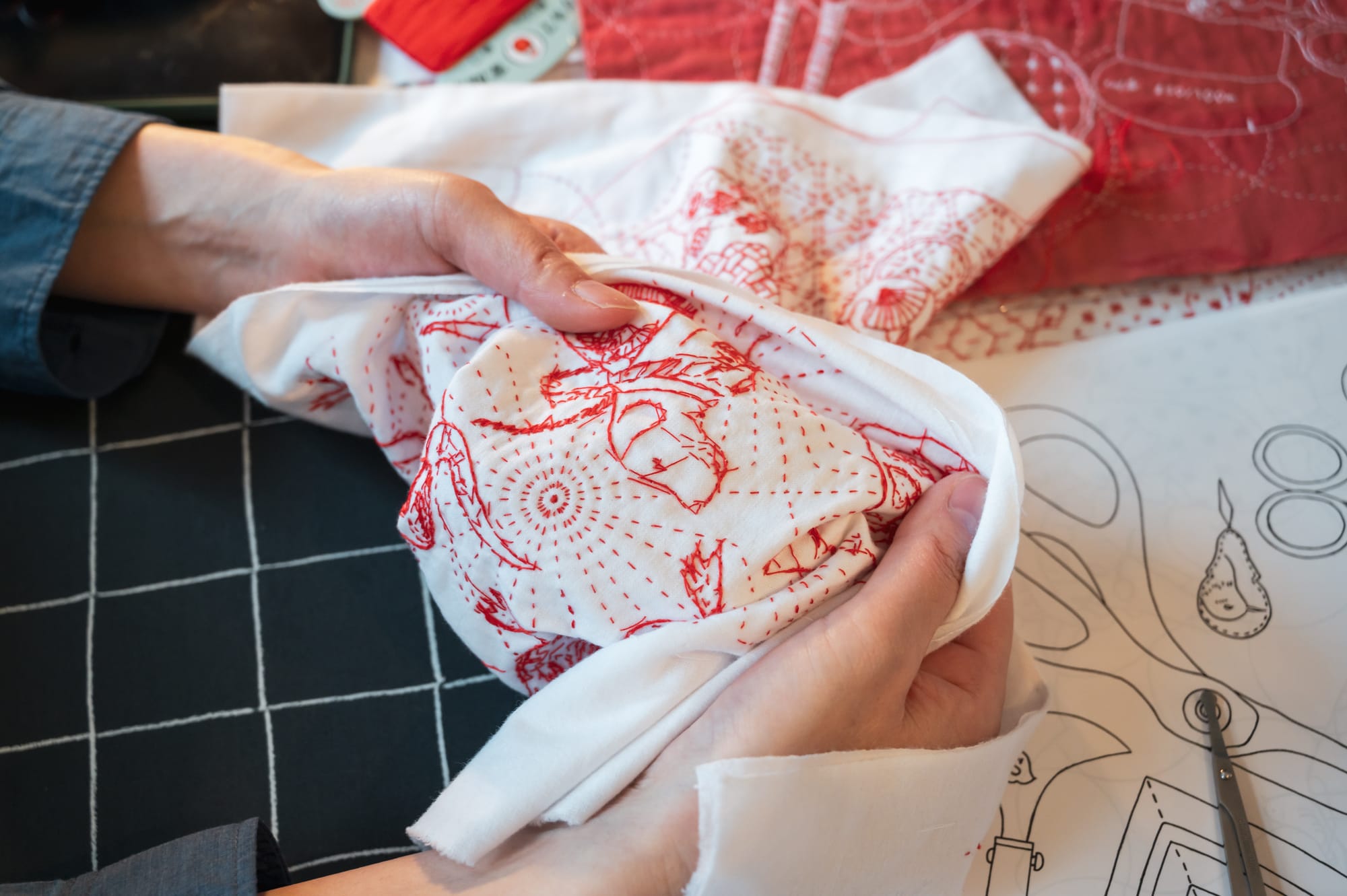
If you want more insights into her technique, there are lots of hints in her book お祝いの刺し子 Festive Sashiko.
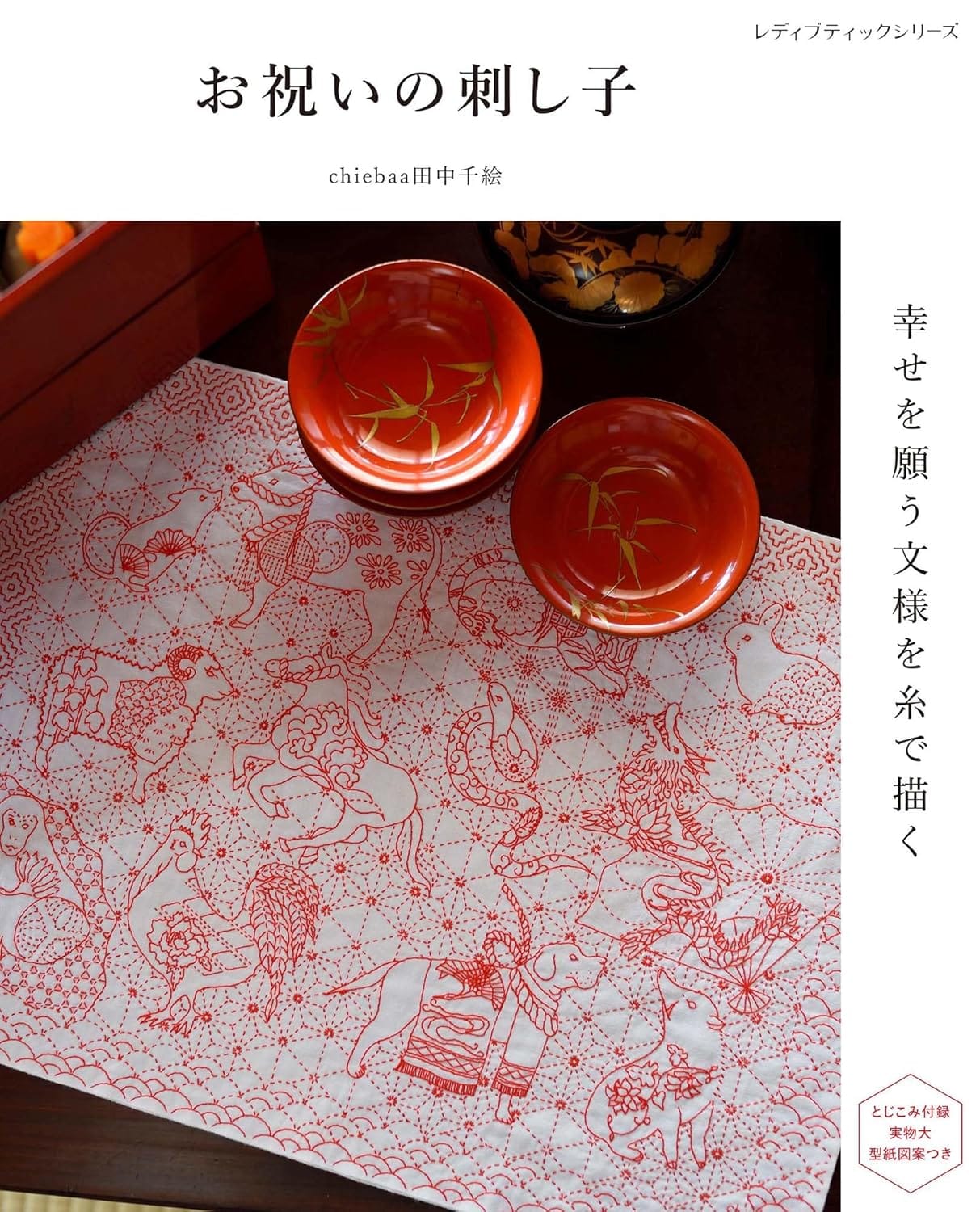
Festive Sashiko
So far, Chiebaa's book is only available in Japanese. I love every page!!! Even though the designs may seem overwhelming to a beginner, they are adaptable to your skill level and there's much to learn.
I asked Chiebaa whether she had a design background. It's hard to believe, but she doesn't.
Sashiko as a way of life
As I listened to Chiebaa talking about sashiko, it became clear that sashiko was not just simple craft to her, but had evolved into something far more complex. What began as a practical solution to aging eyes had blossomed into a complete philosophy of living.
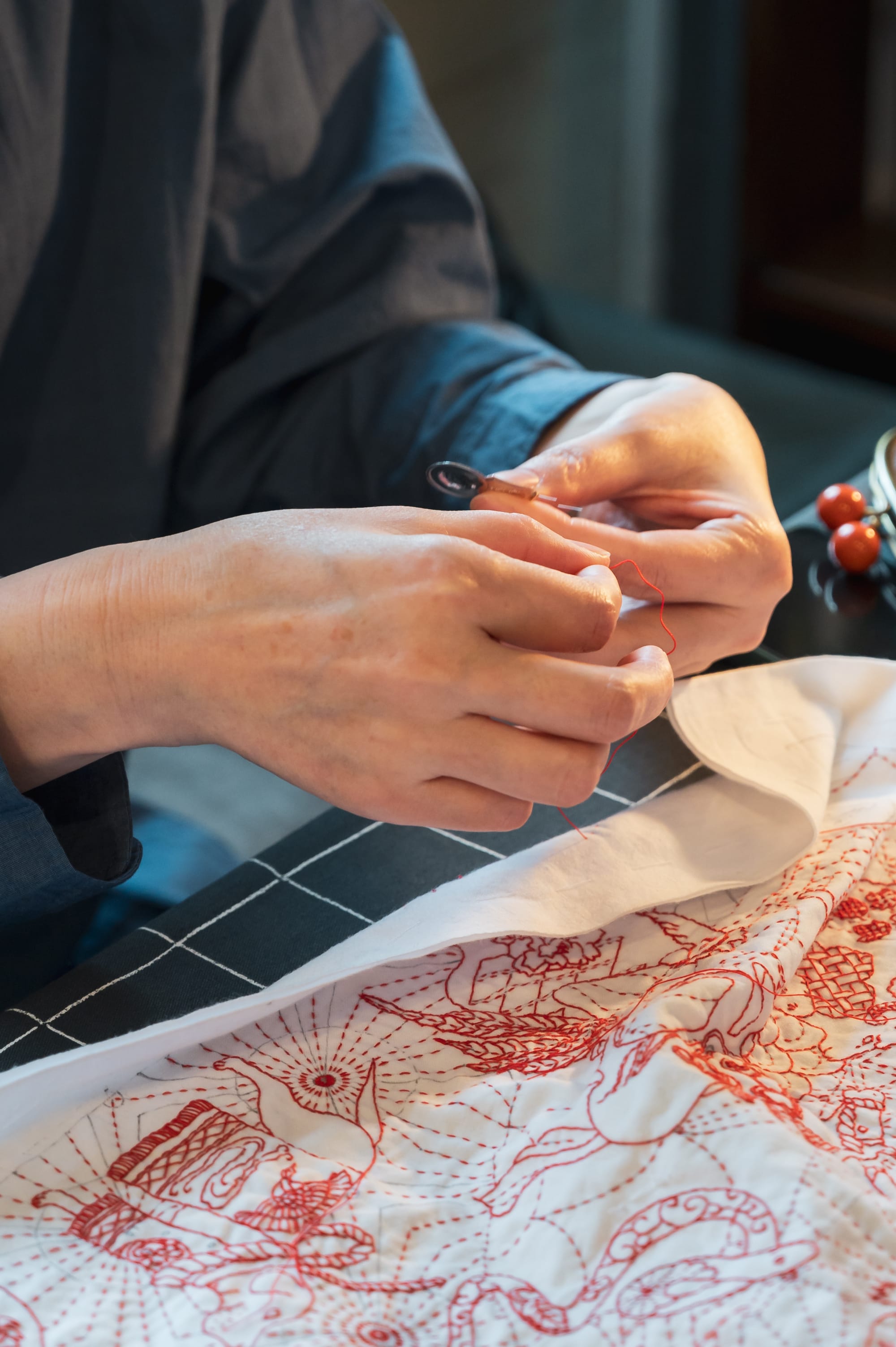
For Chiebaa, sashiko is much more than a hobby — it has become a form of self-expression, a source of joy, and a pathway to inner peace and focus. Each stitch represents not just a technical skill, but a moment of mindful presence. The rhythmic motion of the needle through the fabric creates a meditative space where she can connect with herself and find clarity amid life's complexities.
This deeper connection to sashiko shows how creativity can change our lives when we make it part of our daily routine. Sashiko has given Chiebaa a language through which she can communicate her inner world, translating emotions and experiences into tangible beauty that others can witness and appreciate.
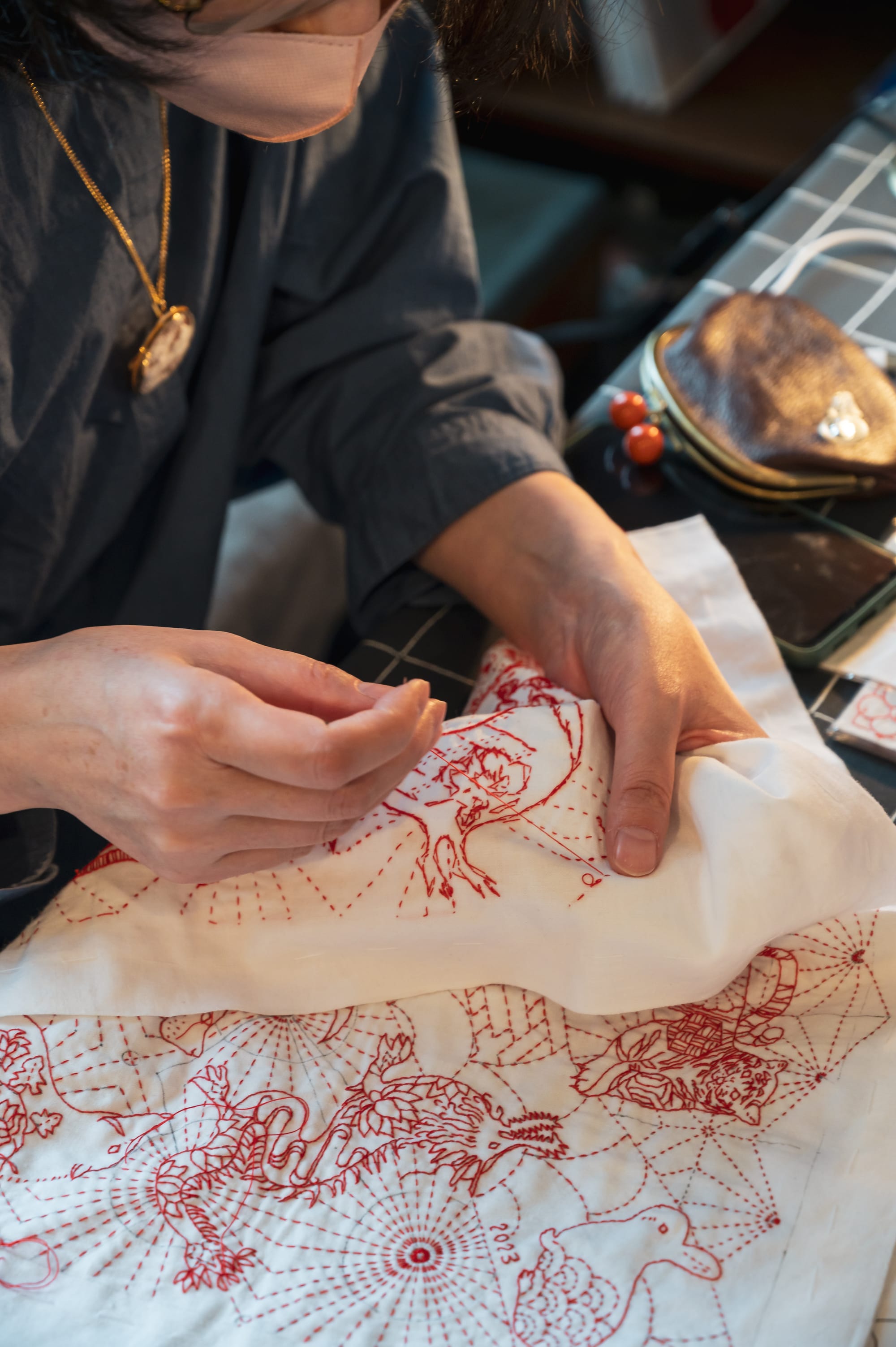
The gift of sharing beauty
One thing I love about Chiebaa's approach to sashiko is her desire to create beautiful and unique things that she can share with others. Unlike her earlier cross-stitch work, which she kept private for personal enjoyment, she now creates her sashiko with the intention of bringing beauty into the world. This shift from internal focus to outward sharing represents another layer of her personal growth—from someone withdrawn from the world to someone who actively contributes to its beauty.
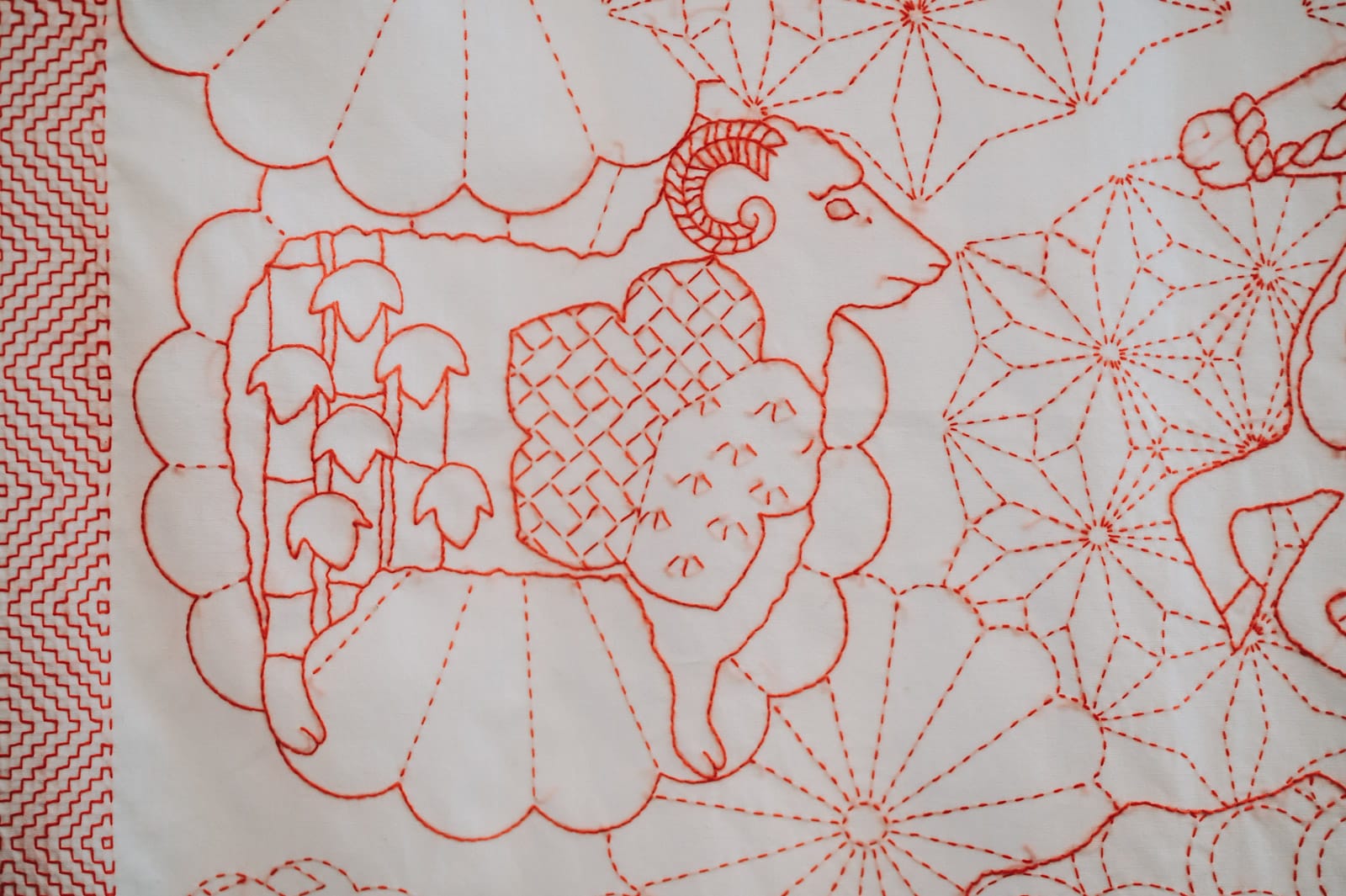
Through her work, Chiebaa offers others a glimpse into the peace and healing that needlework can provide. Her pieces become small gifts to the world, tangible reminders that beauty can emerge from the simplest materials when touched by passionate hands and a peaceful heart.
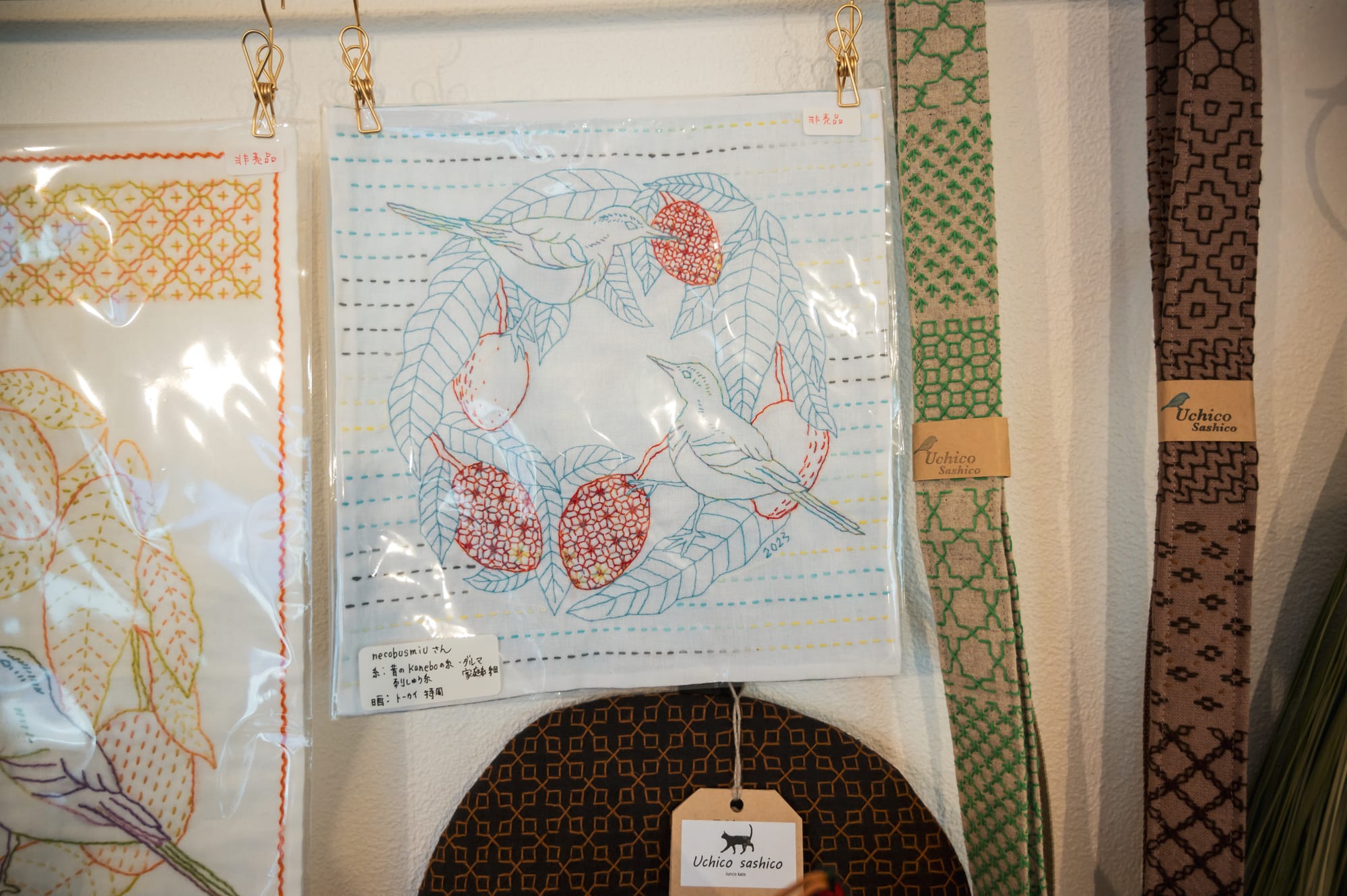
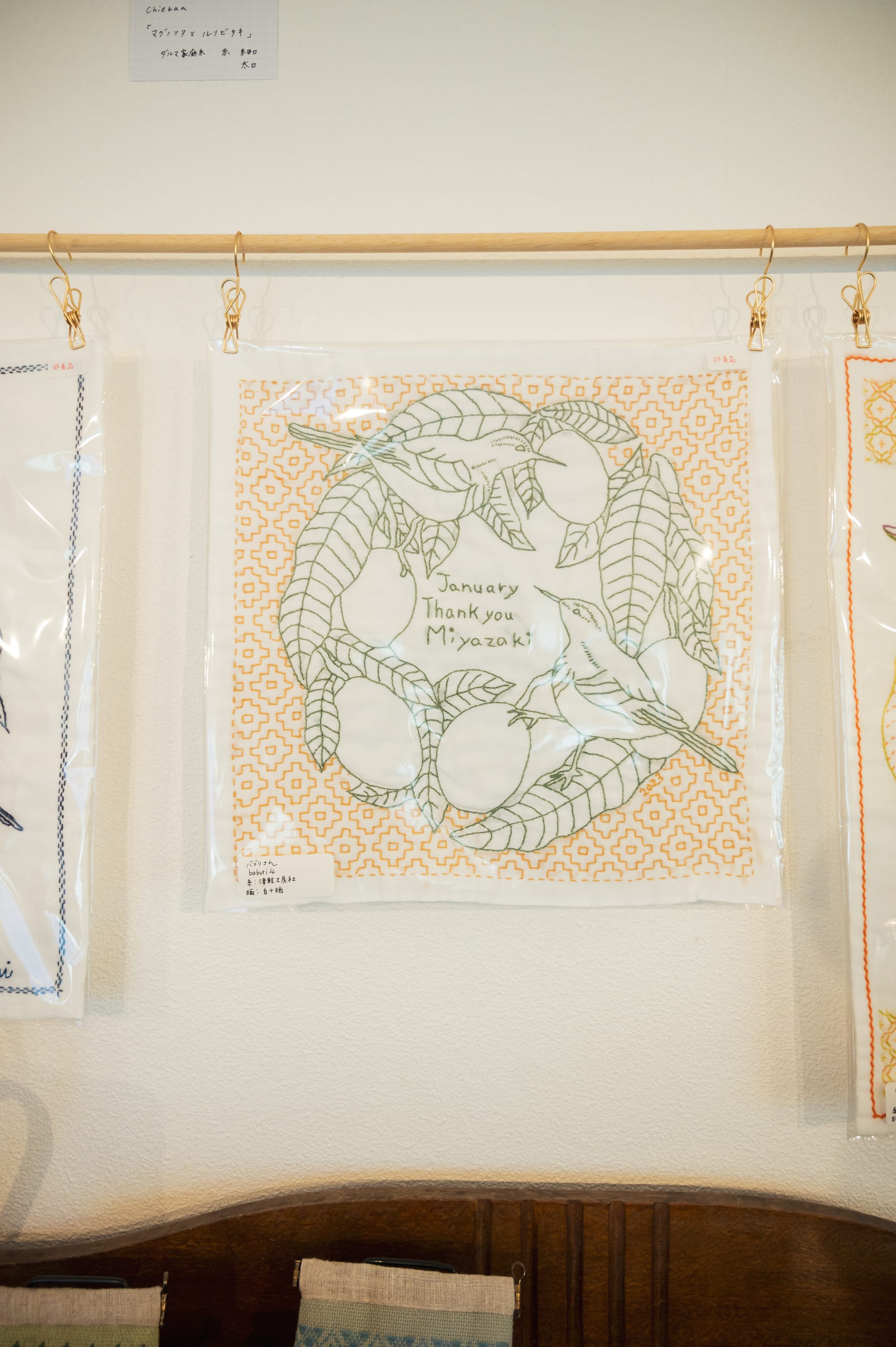
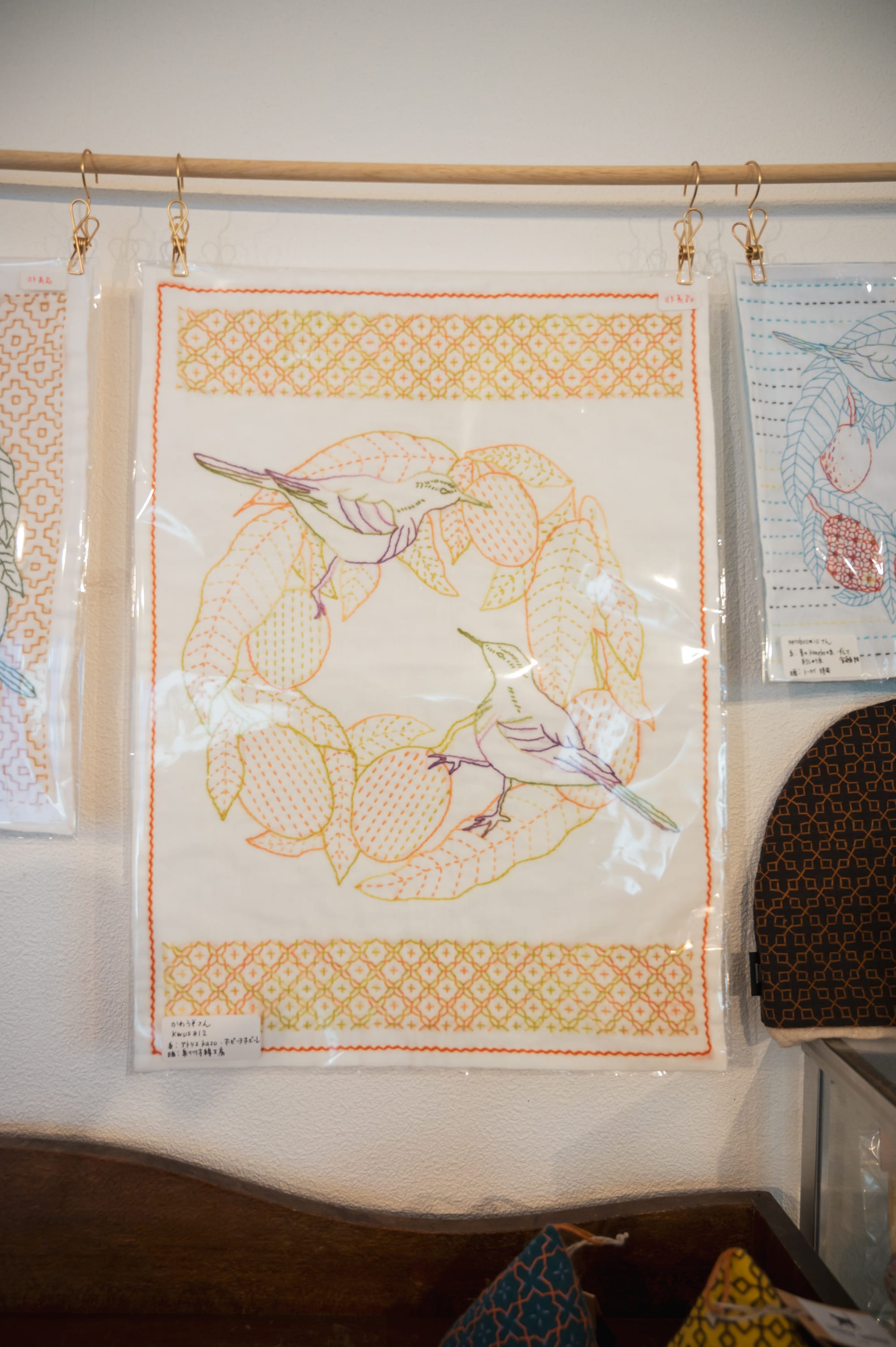
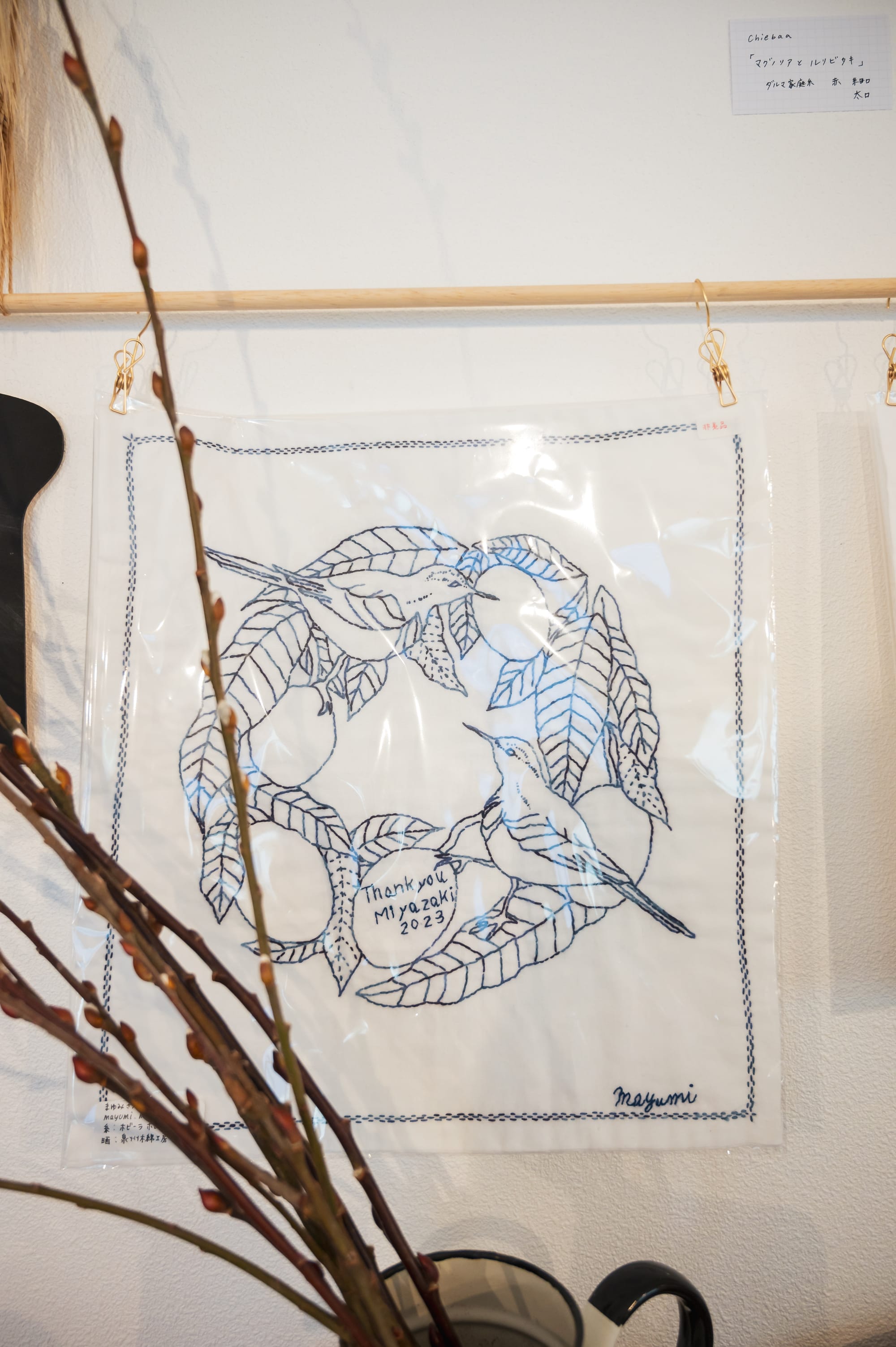
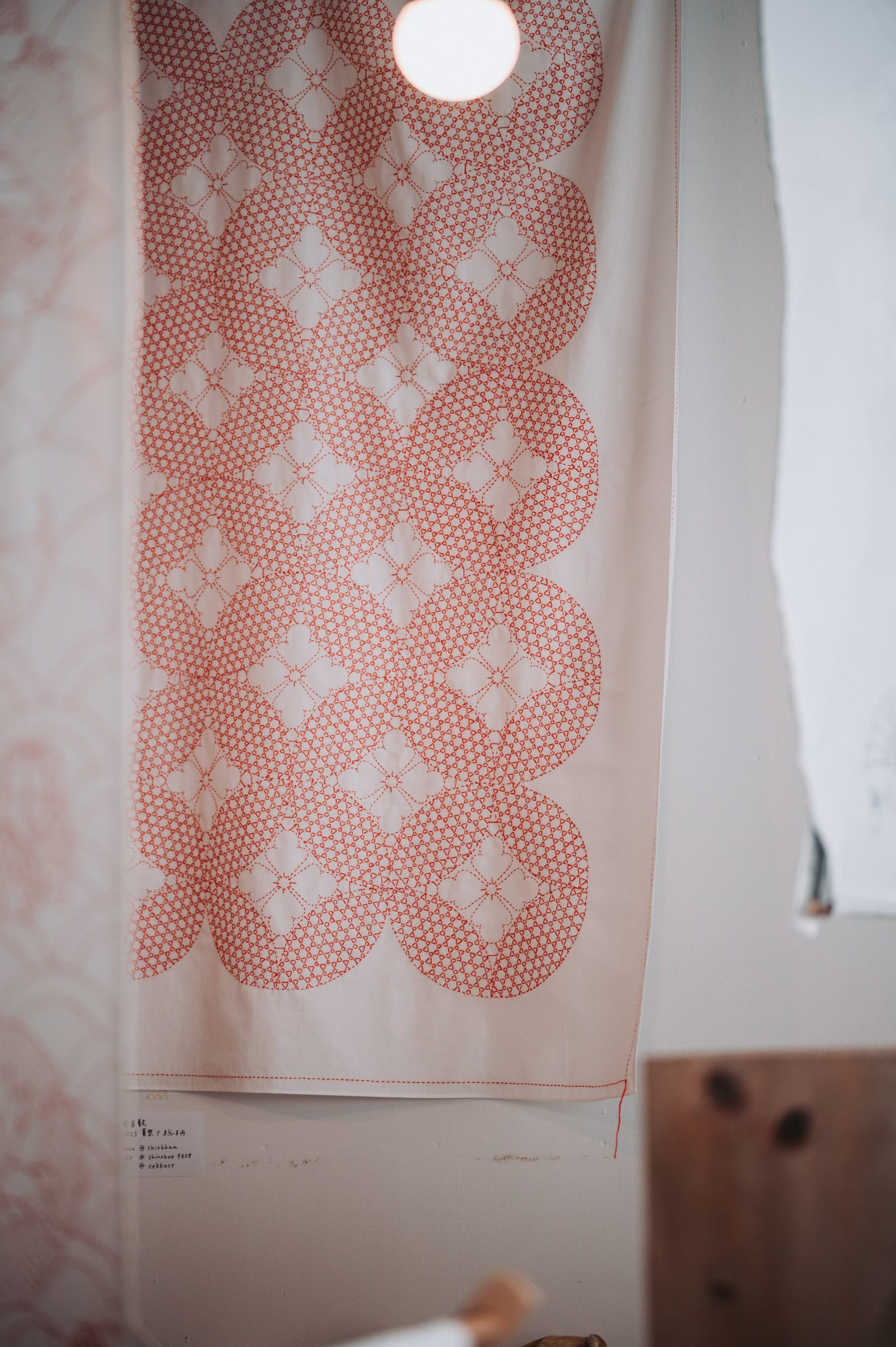
These pieces were stitched by various artisans for the lovely annual sashiko and kogin exhibition at Oomae Nunoten in 2023. The bird motif was generously designed and gifted by Chiebaa.
The essential role of passion
Perhaps most importantly, Chiebaa's journey has convinced her that having something you can be passionate about is essential to a fulfilling life. Her own experience—from the depths of depression to the heights of creative fulfillment—serves as powerful testimony to this belief.
Passion, she has learned, is not merely about enjoyment or skill, but about finding something that connects you to your deepest self and to the world around you. For Chiebaa, sashiko became that vital connection, offering her not just recovery from illness, but a reason to engage fully with life itself.
In watching her work, needle dancing gracefully through fabric, it's impossible not to see that sashiko has given Chiebaa something precious: a way to transform ordinary moments into something special, and ordinary materials into tokens of beauty and meaning.
Conclusion
Chiebaa's journey beautifully illustrates the enduring power of crafting as a source of emotional support and purpose. For decades, cross-stitching served as her kokoro no sasae 心の支え “emotional support”, even acting as the spark kikkake きっかけ for her recovery from depression in her mid-20s. She dedicated herself to this craft, finding personal enjoyment in completing intricate pieces.
However, her declining eyesight made it difficult to count the fabric threads required for cross-stitch, and she began to fear she might lose this vital source of enjoyment.
Discovering sashiko kits with pre-printed patterns allowed her to realize, “I can do this no matter how old I am”, prompting her to switch from cross-stitch to sashiko.
Sashiko didn't just replace cross-stitch; it enabled her to continue her passion, providing a sense of ikigai 生きがい, a “reason for living”. The evolution from using kits to drawing her own patterns further deepened this feeling, allowing her to create whatever she liked using just white fabric.
Her work has developed into a distinctive style, often featuring seasonal themes and birds, and her philosophy on dense stitching has shifted to incorporate more white space, aiming for her work to be healing rather than suffocating.
My thoughts
Looking at Chiebaa today—calm, fulfilled, and radiating the quiet confidence that comes from knowing your purpose—it's remarkable to think of the journey that brought her here. From the bedridden young mother who could barely care for herself to the accomplished artist whose work brings peace to others, her transformation reminds us that our darkest moments can become the foundation for our greatest growth.
For anyone struggling to find their way forward, Chiebaa's story offers a gentle but powerful message: it's never too late to discover the thing that will change everything. Sometimes all it takes is a single stitch.
Comments ()